
World dossier
The Two-Dated Archive: World Record
A public world record: place, power, daily life, and the rules that make story choices costly.
The public dossier
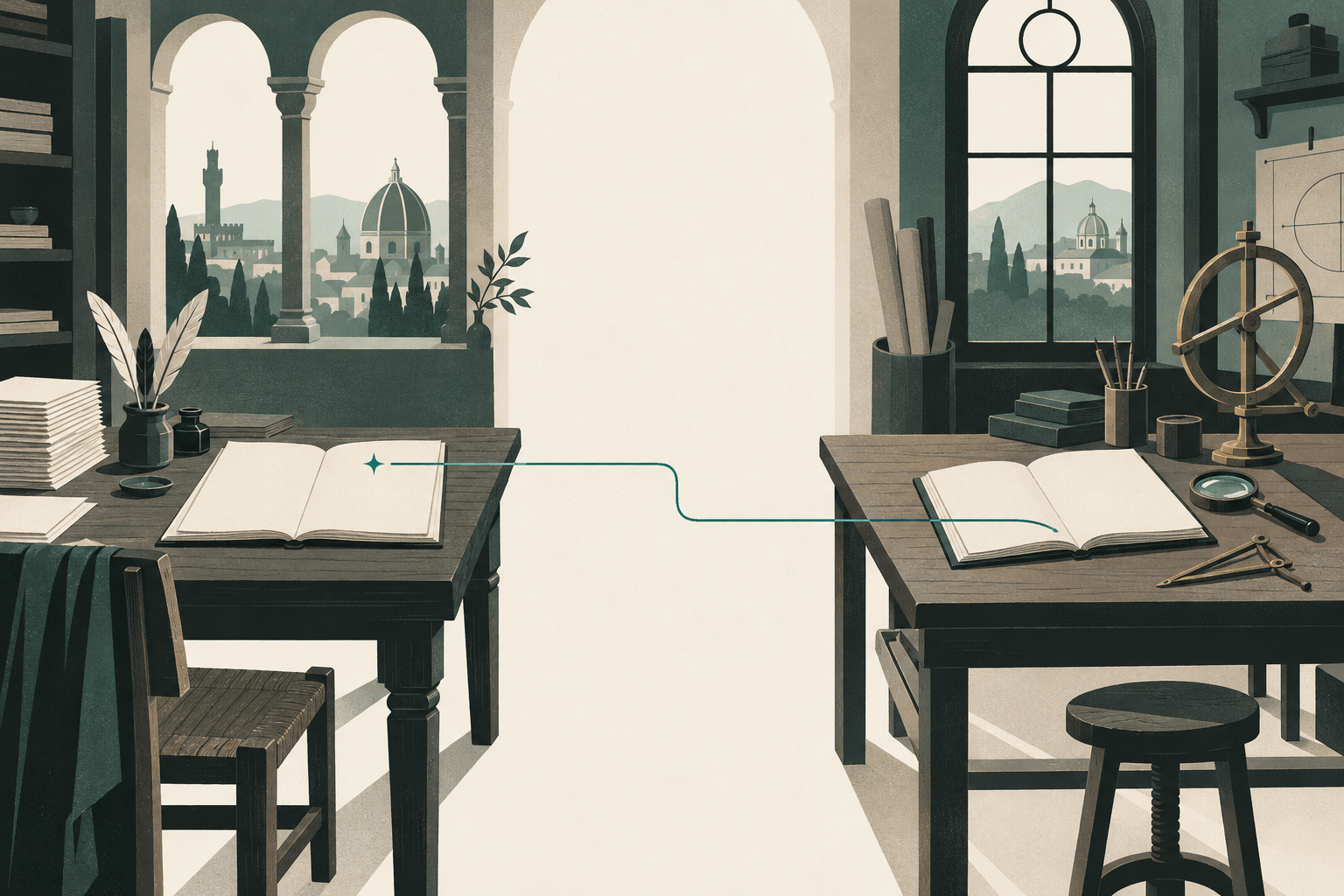
Florence in 1507 and Padua in 1610 are joined by a few paired sheets of paper. Fresh marginal ink can cross the 103 years between them. Nothing else can.
The Two-Dated Archive is built around a narrow speculative rule rather than a general atmosphere of Renaissance magic. A person who possesses one surviving folio can write in its blank margin. The fresh words appear on the paired sheet 103 years away.
Every message consumes space. Erasing a magical line removes it in both dates and destroys a nearby fragment of ordinary writing. The wonder therefore creates the same question as the archive around it: which words are given room to survive?
At a glance
| Historical frame | Florence, 1507, and Padua, 1610 |
| Speculative hinge | Paired sheets exchange fresh marginal ink across a fixed 103-year interval |
| Hard limit | No people, objects, voices, or unlimited text can cross |
| Cost | Blank margin is consumed; erasure damages nearby ordinary writing |
| Primary resources | Paper, ink, light, skilled labor, credit, custody, and access |
| Conflict engine | Institutions want clean certainty while the paired pages make contradiction visible |
Two cities, not one interchangeable “Renaissance”
The 103-year separation is more than a number. Florence in 1507 sits in a republican interval after the Medici heirs were exiled and before their return in 1512. It is a city where patronage still matters, but the institutions and political expectations are not those of the later Medici duchy. The Met: The Medici and Florence
Padua in 1610 belongs to the Venetian Republic and carries the pressure of a long-established university city. Galileo is at the end of his eighteen years teaching there; Sidereus Nuncius appears that year, and he then leaves for Florence. That public chronology gives the 1610 strand a culture of instruments, observation, argument, print, and patronage without requiring the fictional annotator to enter Galileo’s private life. University of Padua: Galileo’s years · Museo Galileo: life
The novel still needs a precise neighbourhood, repository, office, and calendar for each strand. The world page establishes the difference; the production research must earn every street, route, and institutional door.
The material archive
Paper is not a neutral surface in this world. It has fiber, thickness, sizing, mould marks, folds, stains, repairs, and a history of custody. A watermark is produced where a raised wire design on a papermaking mould leaves a thinner area in the sheet. Researchers can use such marks as evidence about provenance, but no single motif automatically supplies a date or mill. Library of Congress: historic watermarks
Ink also changes. Iron-gall inks commonly combined an iron salt, plant tannins, and a binder such as gum arabic. Some formulations can fade, migrate, strike through, or corrode the paper that carries them. The story uses that material instability as texture, not as magic: the supernatural rule is the cross-date exchange, while real ink remains variable, physical, and fallible. Library of Congress: iron-gall ink research · Library of Congress: ink corrosion
The archive includes printed and handwritten objects. Early print culture did not abruptly replace scribes, note-takers, or manuscript correction. Books could be designed for additions; readers filled margins and blank leaves; printed and handwritten layers shared the same object. Folger: technologies of writing
The rule of wonder
The paired folios obey five public rules:
- Only fresh marginal ink crosses the 103-year interval.
- The exchange works only between surviving counterpart sheets.
- It cannot move a drawing, voice, person, or physical object.
- Every word consumes the finite blank margin.
- Erasure affects both dates and destroys a nearby piece of ordinary writing.
The fifth rule is the cost that makes the mechanism belong to this story. A careless attempt to remove an impossible warning might also take a creditor’s name, a date, or a line of testimony. Magic does not float above documentary power; it intensifies the consequences of editing a record.
Daily life is an access system
The most important inequality in the Two-Dated Archive is not who understands magic. It is who can reach the page.
A copyist needs daylight, ink, paper, tools, time, and permission. A paper seller can preserve receipts that an official register omits, yet still lack entry to the room where the register is reviewed. A patron can make a commission feel like generosity while controlling the deadline and the definition of a clean result. A claimant may remember exactly what happened and still need someone else to turn that knowledge into an actionable record.
This is why the setting tracks credit, literacy, work, custody, and storage alongside spectacular ideas. The world becomes dramatic when every character encounters the same archive through a different gate.
Institutions and overlapping power
No single authority controls the whole truth. Workshops control skilled labor and access to the object. Patrons control money, reputation, and commissions. Civic or legal offices decide which copy can be acted upon. Households, creditors, claimants, and religious communities preserve other pieces of memory.
The overlap creates both manipulation and resistance. Altering one register may change an official account, but it cannot automatically erase every receipt, witness, copy, or inherited grievance. Likewise, finding a magical sentence cannot settle a case. The sentence can direct attention; ordinary evidence still has to survive comparison.
The exact Florentine office and 1610 repository remain research gates. Public copy should not name an institution until the source ledger can support its jurisdiction and procedure.
Recurring locations
Bellori’s workshop
A daylight-dependent room where access, piecework, supervision, and repair converge. Its exact organization remains invented until historical research fixes the employment and commission model.
Caterina’s paper-and-credit premises
Receipts, debts, scraps, and remembered transactions create a counter-archive. The location turns domestic and commercial evidence into plot pressure.
The review space
The place where a private technical judgment becomes a public risk. Its historical form—office, chamber, court, or another forum—is intentionally unresolved.
The Padua workroom
Instruments, printed matter, handwritten notes, and the counterpart folio gather in a city charged by university culture and the events of 1610. The story has not yet named the future writer or the exact instrument they use.
The repository
Locked storage makes custody as important as discovery. A record that cannot be reached might as well belong to another world.
Sensory register
The world’s recurring details are rag-paper tooth, iron and tannin, pumice dust, river damp, lamp smoke, drying cord, street carts, workshop bells, lens flare, cold stone, and the green-black shift of aging ink.
Each detail should do more than make the scene look old. Damp changes drying and storage. A bell changes available work time. A locked door changes whose knowledge can matter. A scraped patch changes what later hands can recover.
Fact and invention note
- Documented: the political interval of Florence in 1507; Padua’s university culture; Galileo’s 1592–1610 appointment; material practices involving handmade paper, watermarks, iron-gall ink, print, and handwritten annotation.
- Research-gated: exact offices, procedures, routes, work arrangements, prices, and the legal mechanism of the property claim.
- Invented: the paired paper, 103-year rule, reciprocal erasure, Bellori’s workshop, Caterina’s premises, and the central conspiracy.
The world illustration is an editorial visualization, not a reconstruction of a specific documented interior.
Follow this world
- Meet Livia Serrani, whose material attention makes the world visible.
- Trace The Register That Writes Back, the causal problem created by the rule.
- Open The Chronicles of Renaissance Scribes for the joined story dossier.
- Visit World Building for methods, templates, and related examples.
Connected records
These cards use the exact relationship IDs recorded for this dossier.
Characters
The people who can act within this world.
Connected record
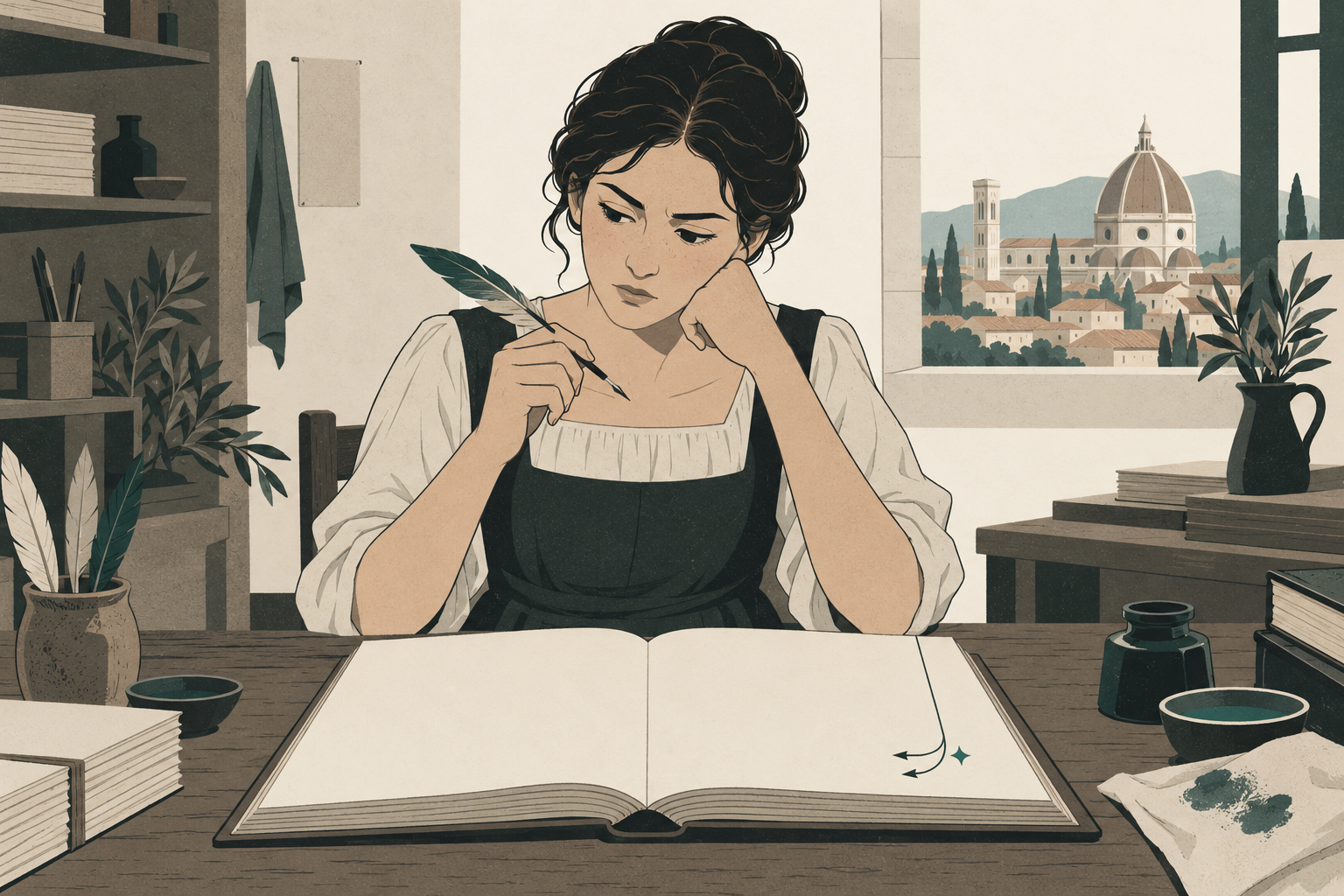
Livia Serrani: Character Record
Meet Livia Serrani, a fictional Florentine copyist whose desire for a secure, flawless record collides with evidence the archive tried to erase.
Open recordPlots
The causal routes this world makes possible.
Connected record
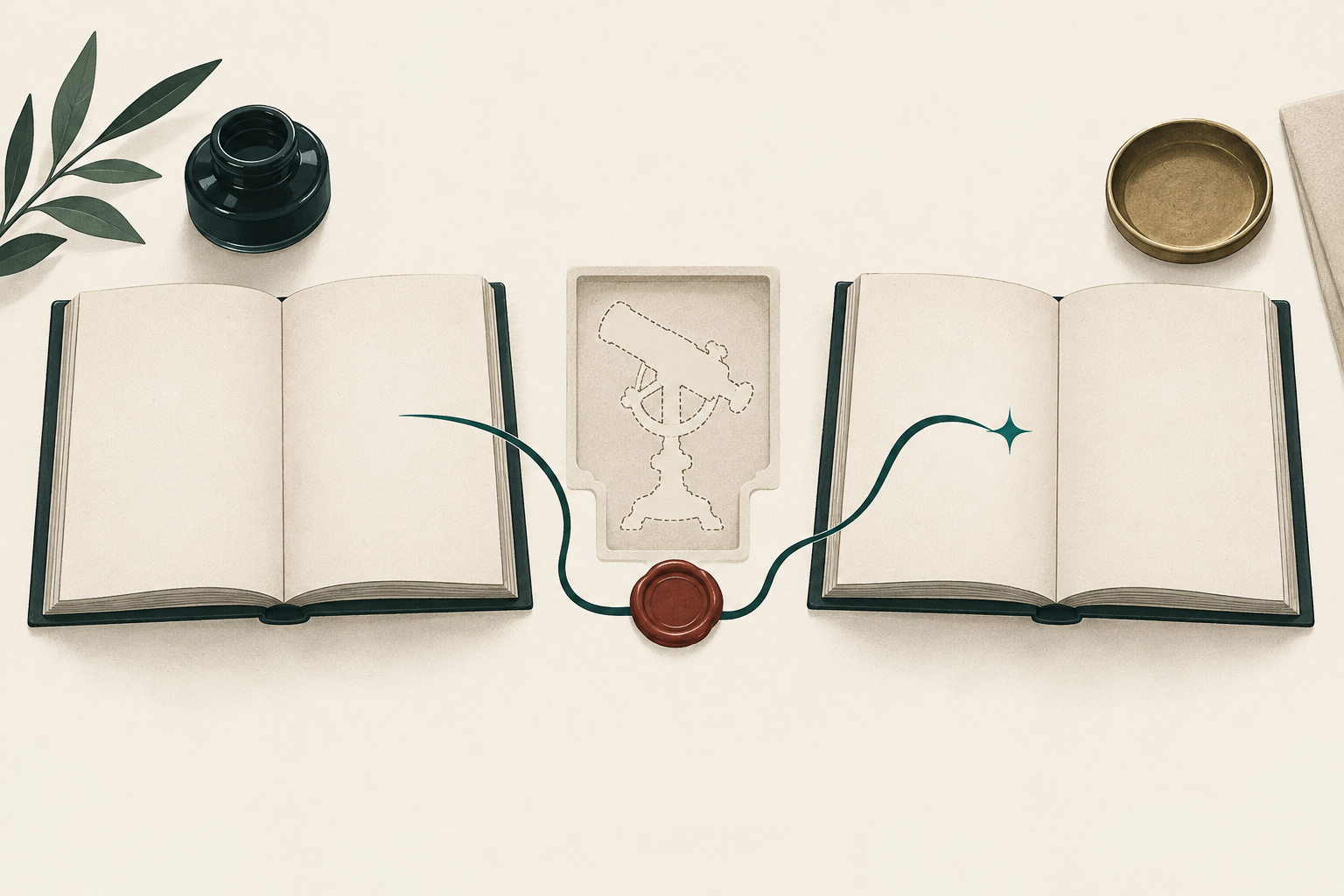
The Register That Writes Back: Plot Record
See how a future warning, a damaged property register, and ordinary receipts form a causal historical-fantasy plot without letting magic solve the case.
Open recordStories
The stories that inhabit this world.
Connected record
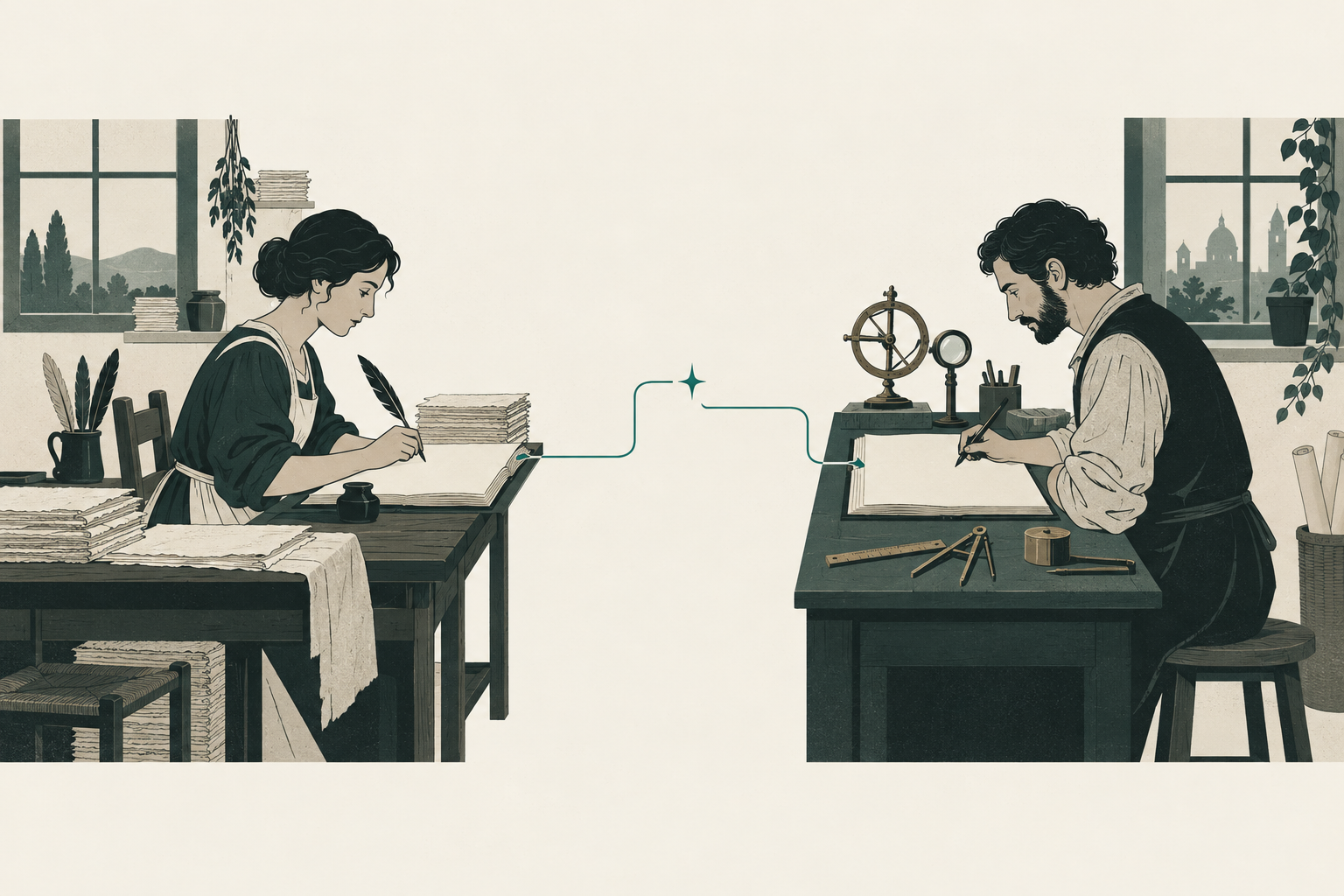
The Chronicles of Renaissance Scribes
Explore the character, world, plot, research, and honest development status behind The Chronicles of Renaissance Scribes.
Open recordField notes
Craft and research notes connected to this record.
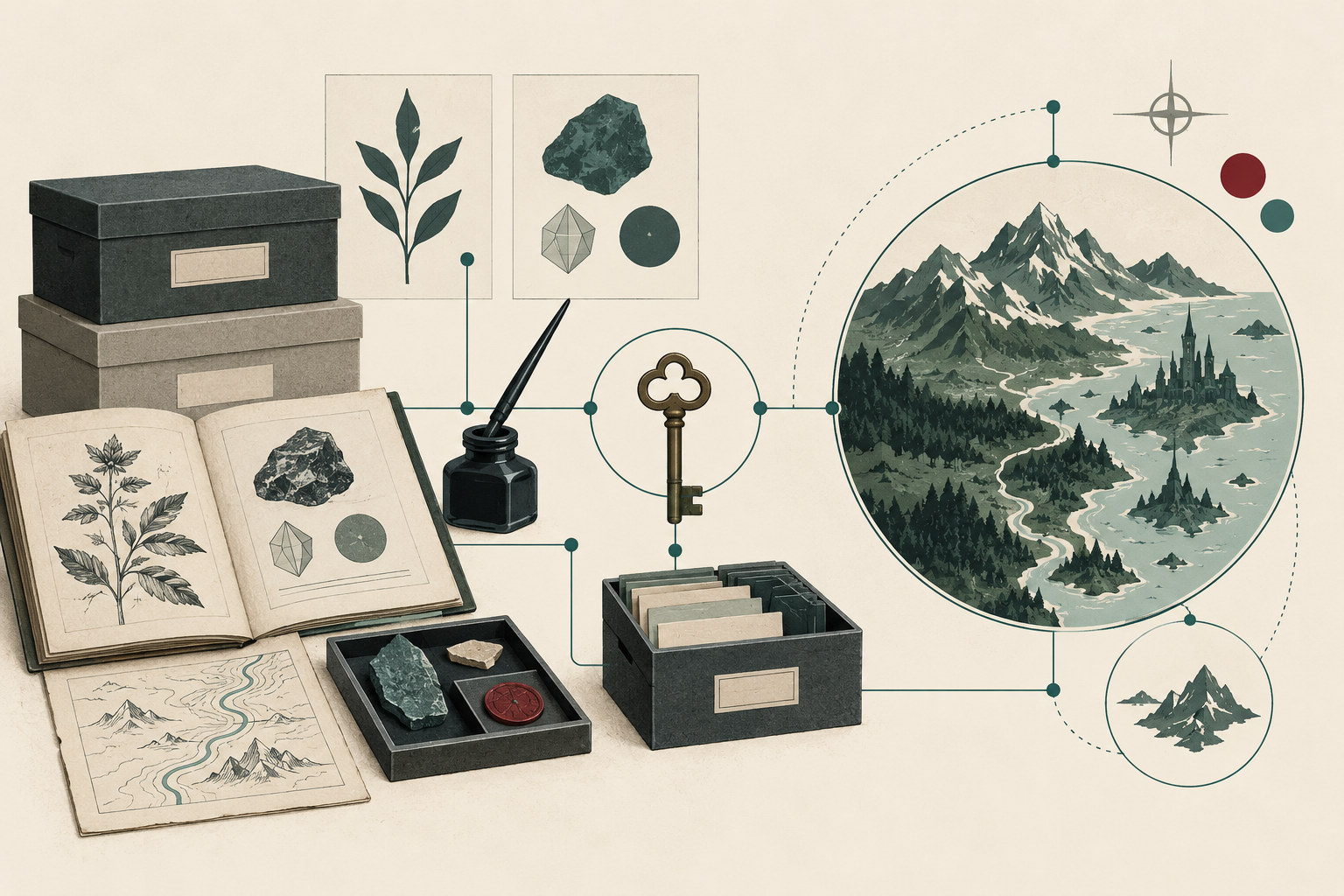
Connected record
How to Build a Historical-Fantasy World from Records, Materials, and Access
Build a historical-fantasy world by mapping materials, access, authority, cost, and one speculative rule, with a practical worked example.
Open record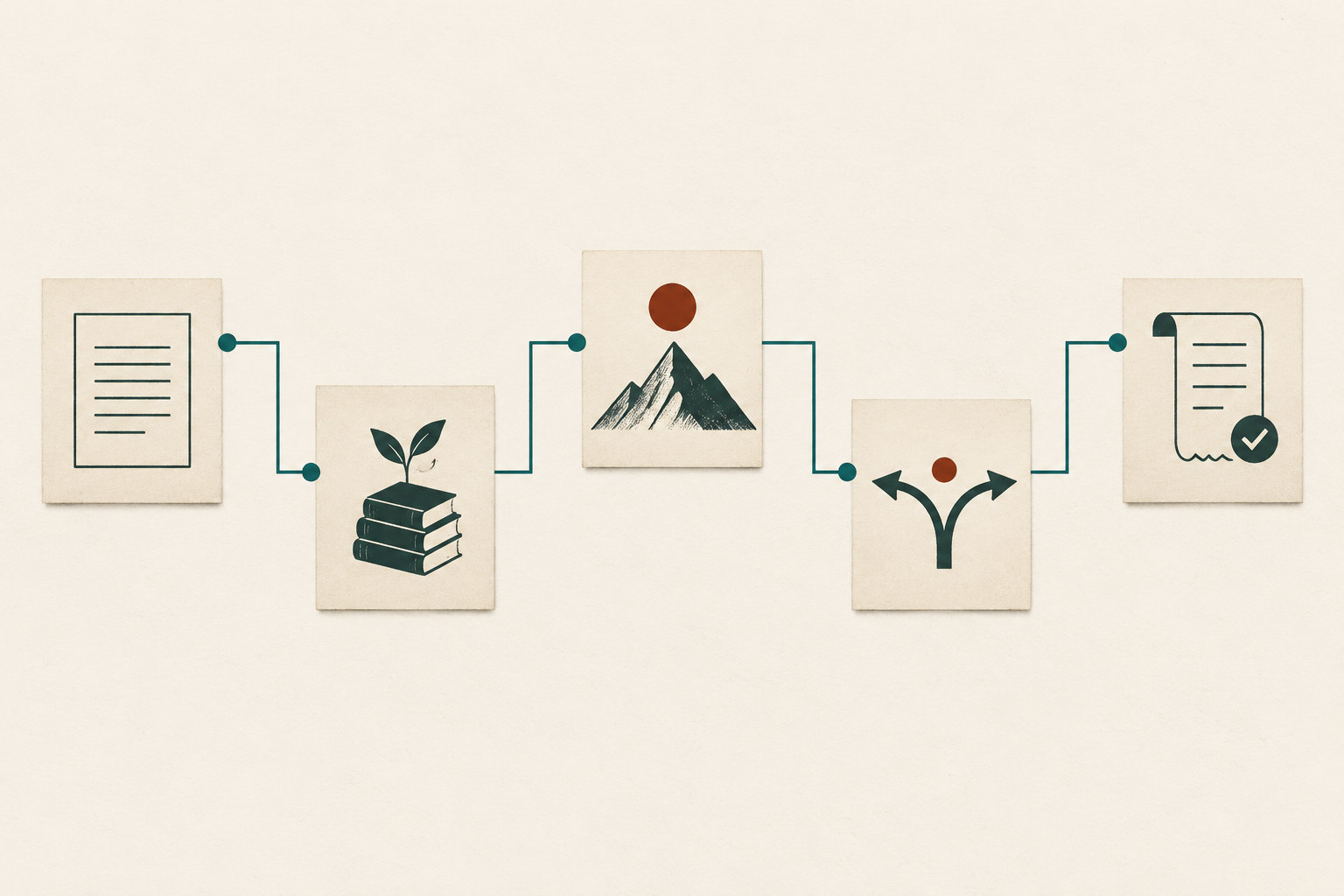
Connected record
A Plot Structure Example Built with Because/Therefore Causality
Use because/therefore causality to turn a premise into a plot where every choice closes an option and creates the next problem.
Open record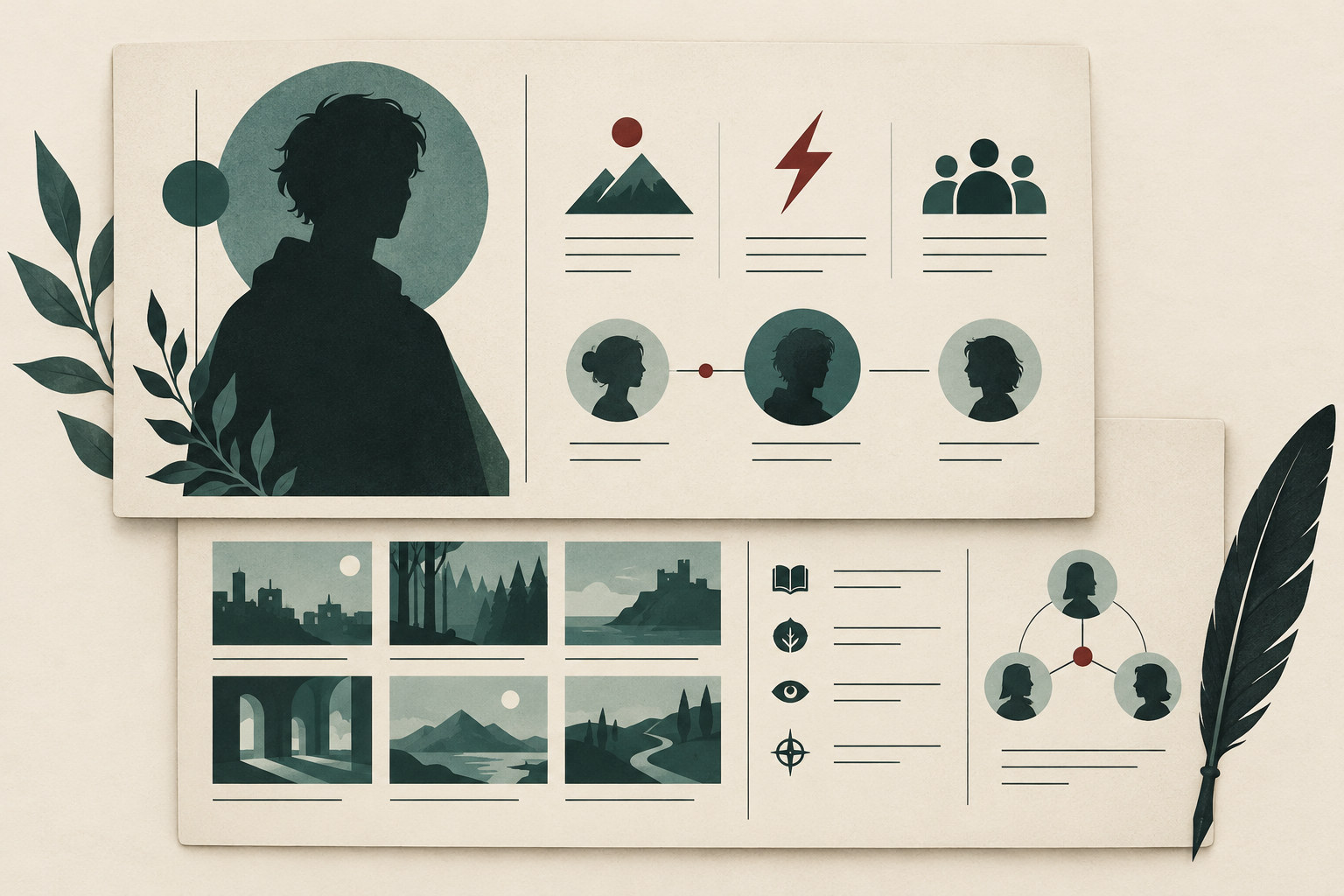
Connected record
What Belongs in a Character Sheet for a Novel?
Build a novel character sheet that tracks goals, conflict, voice, relationships, knowledge, continuity, and change without collecting trivia.
Open record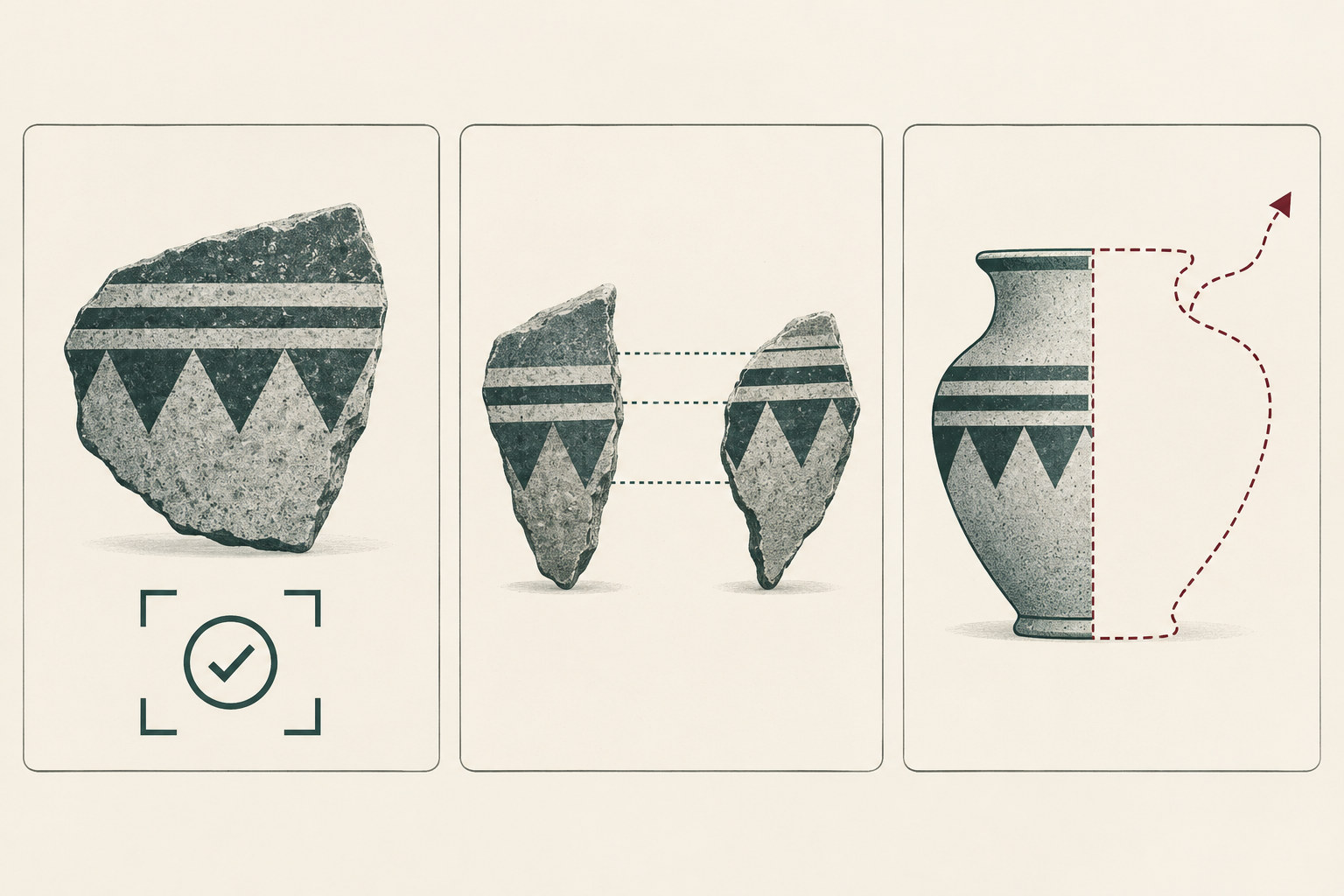
Connected record
How to Separate Historical Fact, Inference, and Invention
Use a claim-level fact, inference, and invention ledger to research historical fantasy honestly without surrendering imaginative freedom.
Open record
Connected record
Magic with a Cost: Designing Rules That Create Story Choices
Design a fantasy magic system whose channel, limits, access, and cost create difficult character choices instead of convenient solutions.
Open record