
Character dossier
Livia Serrani: Character Record
A public character record: motivation, pressure, choice, and documented historical context.
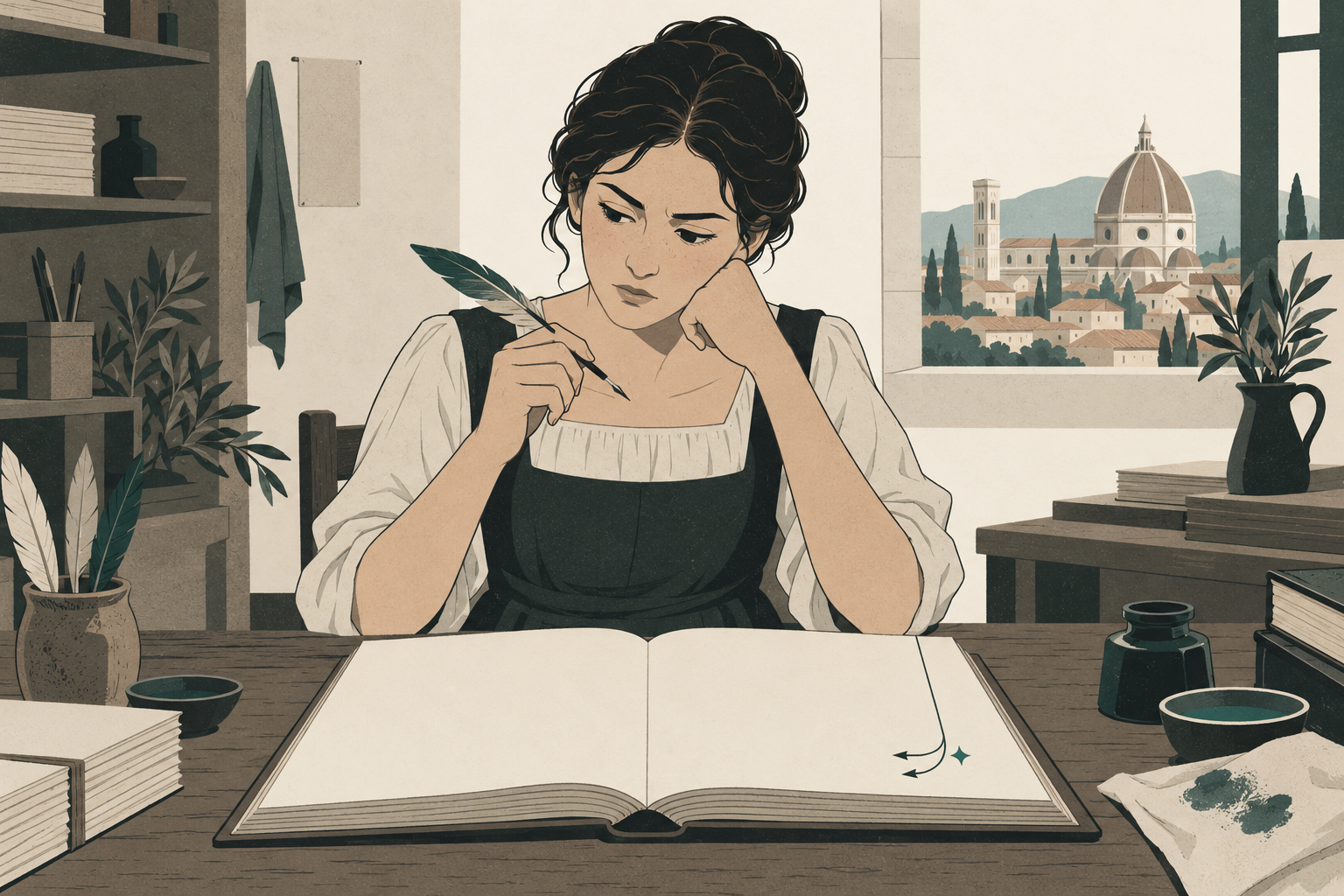
The public dossier
A fictional Florentine copyist who can read the physical history of a page—but has learned to survive by making uncertainty disappear.
Livia wants a permanent place in a respected copying workshop. The damaged property register on her desk seems to offer exactly that: finish the work cleanly, meet the deadline, and prove that she is more useful than troublesome.
Then a warning appears in a blank margin. The ink looks a century old. The sentence tells her not to make a correction she has not yet begun.
That impossible line does not give Livia a new personality or a heroic destiny. It presses directly on the contradiction she already carries: she cares about evidence, but she believes safety belongs to the person who can make a page look certain.
At a glance
| Story role | Lead character and apprentice register copyist |
| Historical basis | Wholly invented |
| Setting | Florence, 1507, in a researched historical-fantasy world |
| Immediate goal | Complete a damaged property register and secure permanent work |
| Core pressure | Preserving disputed evidence may cost the position her household needs |
| Arc shape | Positive change driven by evidence, responsibility, and public risk |
| Connected story | The Chronicles of Renaissance Scribes |
The character engine: desire, need, and misbelief
Livia’s desire is practical: steady skilled work. It gives her a reason to accept the register, tolerate Bellori’s supervision, and value the patron who can turn temporary usefulness into security.
Her need is harder. She must learn that accuracy can require visible uncertainty. A record is not more truthful because every contradiction has been scraped away.
Her misbelief joins the two: if the finished page contains no visible doubt, no powerful person will have a reason to question the copyist who made it.
This is why the premise creates a character arc instead of merely giving Livia an unusual object. The folio does not ask whether she believes in magic. It asks what she is willing to preserve when certainty is the price of employment.
What Livia can do—and what she cannot
Livia notices fibers, pressure, drying time, corrections, and changes of hand. When a line is wrong, she looks first at how it came to be on the page. That material attention makes her valuable in a workshop and dangerous to anyone relying on a tidy alteration.
Her skill is not secret genius. She cannot command an archive, compel a patron, enter every office, or assume that a document will be believed because she has examined it carefully. Access, rank, money, and custody remain stronger than observation unless she can connect what she sees to ordinary corroborating evidence.
That limit is essential to her agency. Livia’s meaningful actions are not sudden feats of authority. They are decisions about what to test, what to conceal for a time, whom to trust, and when a technical correction becomes an ethical choice.
How she behaves on the page
Livia uses precise sentences and few adjectives. She disguises challenges as corrections: Which copy supplied that name? is safer than Who changed it?
Under pressure, she handles an object before naming an emotion. She trims a quill, squares loose sheets, checks an edge against the light, or waits for wet ink to settle. When a plan fails, she narrows the question and looks for a second record rather than asking the impossible page to become an oracle.
These habits keep description tied to action. A paper fiber matters because it changes what Livia believes she is holding. A missing name matters because it changes who can make a claim. Material detail must alter the next choice or it remains decoration.
The relationships that apply pressure
Master Bellori
Bellori can offer instruction, access, and the possibility of permanent work. Livia wants all three. He values her clean pages, and that praise strengthens the very belief the story needs to test: that removing visible disorder is the same as doing good work.
Caterina Orsi
Caterina is an invented paper seller and creditor whose receipts preserve the kind of ordinary evidence an official register can ignore. She makes the cost of a missing line concrete. Their relationship is not a decorative friendship; it is an exchange of risk, credit, and partial knowledge.
The unknown annotator
The person writing from 1610 begins as an anomaly, becomes a source, and gradually has to be treated as another limited person. Neither writer can see the other’s whole world. Each has something the other needs, and each has reasons to withhold information.
The patron
The patron represents a credible temptation: protection, income, and a clean outcome. The pressure works because the offer answers Livia’s real need for security rather than asking her to choose between obvious good and obvious evil.
A spoiler-safe route through her arc
The early arc rewards Livia for neat restoration. The damaged register then shows her that the same practice can remove a claimant from the page. When the future warning predicts a correction she has not made, she tests it instead of surrendering judgment to it.
From there, each turn makes private accuracy less separable from public responsibility. Livia must compare the magical message with receipts, hands, custody, and testimony. The final decision and its aftermath remain inside the story; this dossier records the pressure that makes that decision belong to her.
The historical ground beneath the invention
Livia is fictional, and her exact workshop role remains a research question. The setting does have strong material foundations. Iron-gall ink was the most common Western writing ink for centuries, and different formulations can fade, bleed, strike through, or damage paper. Handmade paper often carried watermarks formed by raised wire designs in the mould, creating material clues about a sheet’s manufacture and movement. Library of Congress: iron-gall ink · Library of Congress: historic watermarks
Print also did not make handwritten work vanish. Early printed books were completed, corrected, and annotated by hand; wide margins and blank leaves could be working space. Florence’s adoption of print developed alongside its deep manuscript culture. Folger: technologies of writing · National Gallery of Art: Florentine publishing
What those sources do not prove is that a woman named Livia held this post, used a particular office, or had a specified right to challenge a register in 1507. Those details remain invention or open research until the project can name the institution, record series, and procedure.
Fact and invention note
- Documented context: republican Florence in 1507; mixed manuscript and print practice; handmade paper, watermarks, marginal writing, and iron-gall ink.
- Historically plausible but not yet locked: a paid copying route for Livia, the exact workshop arrangement, and the form of the property review.
- Invented: Livia, Bellori, Caterina, the patron, the paired folios, and the central dispute.
Livia’s portrait is an editorial character visualization, not an authentic historical likeness.
Follow this record
- Enter The Two-Dated Archive to see the material and institutional rules that limit her choices.
- Trace The Register That Writes Back for the spoiler-safe causal route.
- Open The Chronicles of Renaissance Scribes for the combined story dossier.
- Read Character Arc: Desire, Misbelief, and Choice for the craft method behind this worked example.
Connected records
These cards use the exact relationship IDs recorded for this dossier.
Worlds
The systems that shape this character.
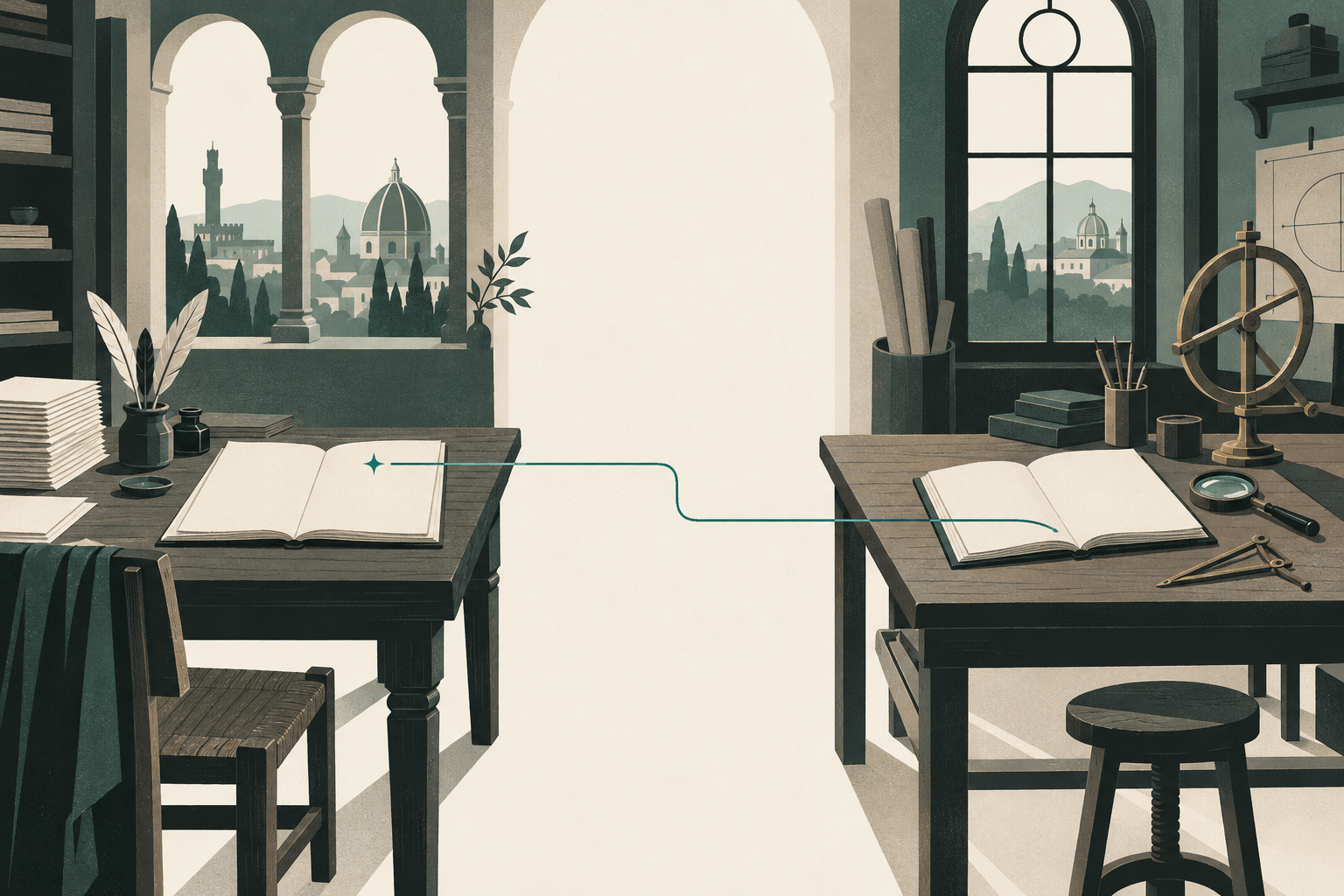
Connected record
The Two-Dated Archive: World Record
Explore a historical-fantasy world linking Florence in 1507 to Padua in 1610 through scarce marginal ink, physical records, and costly erasure.
Open recordPlots
The causal routes that pressure this character.
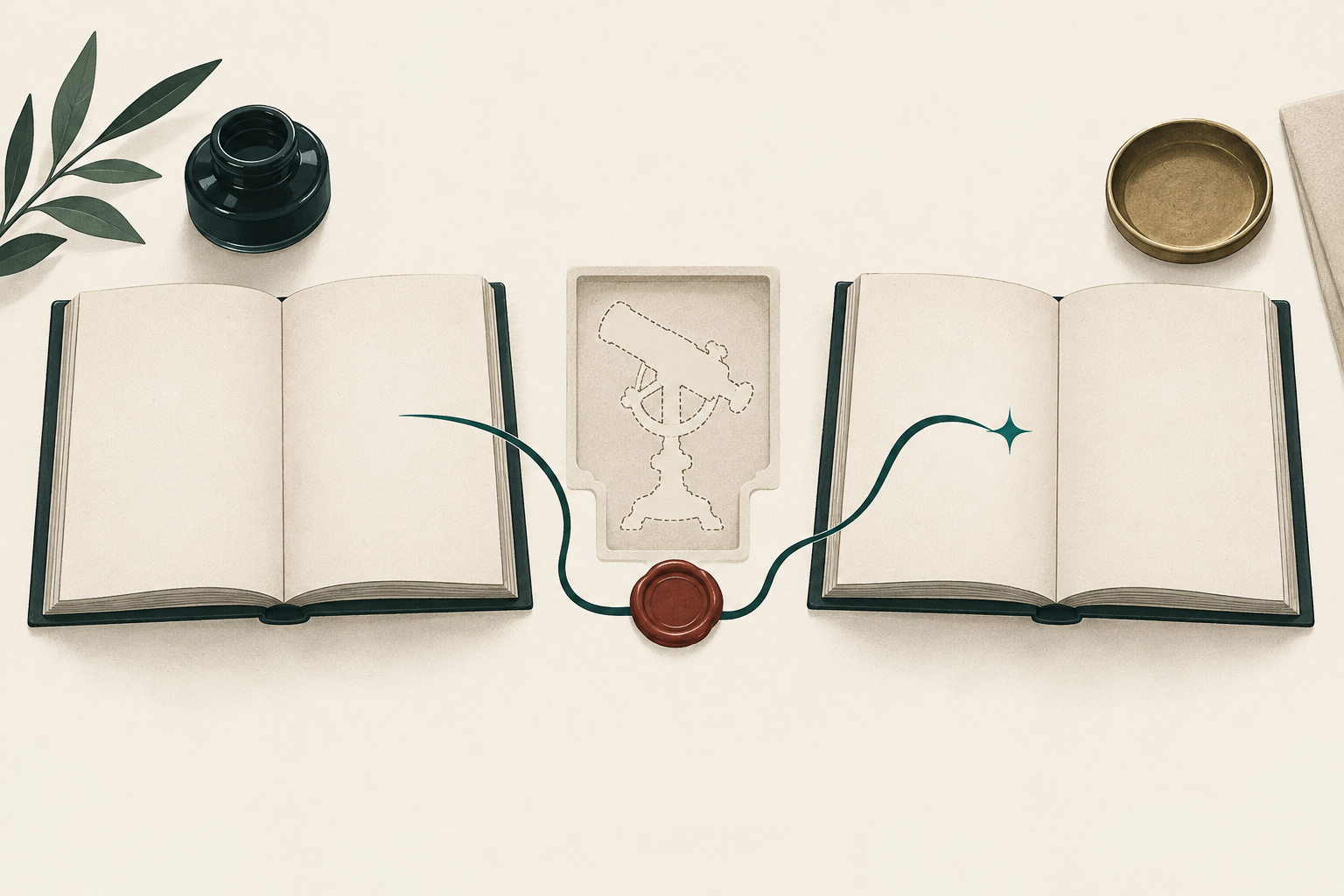
Connected record
The Register That Writes Back: Plot Record
See how a future warning, a damaged property register, and ordinary receipts form a causal historical-fantasy plot without letting magic solve the case.
Open recordStories
The stories this character belongs to.
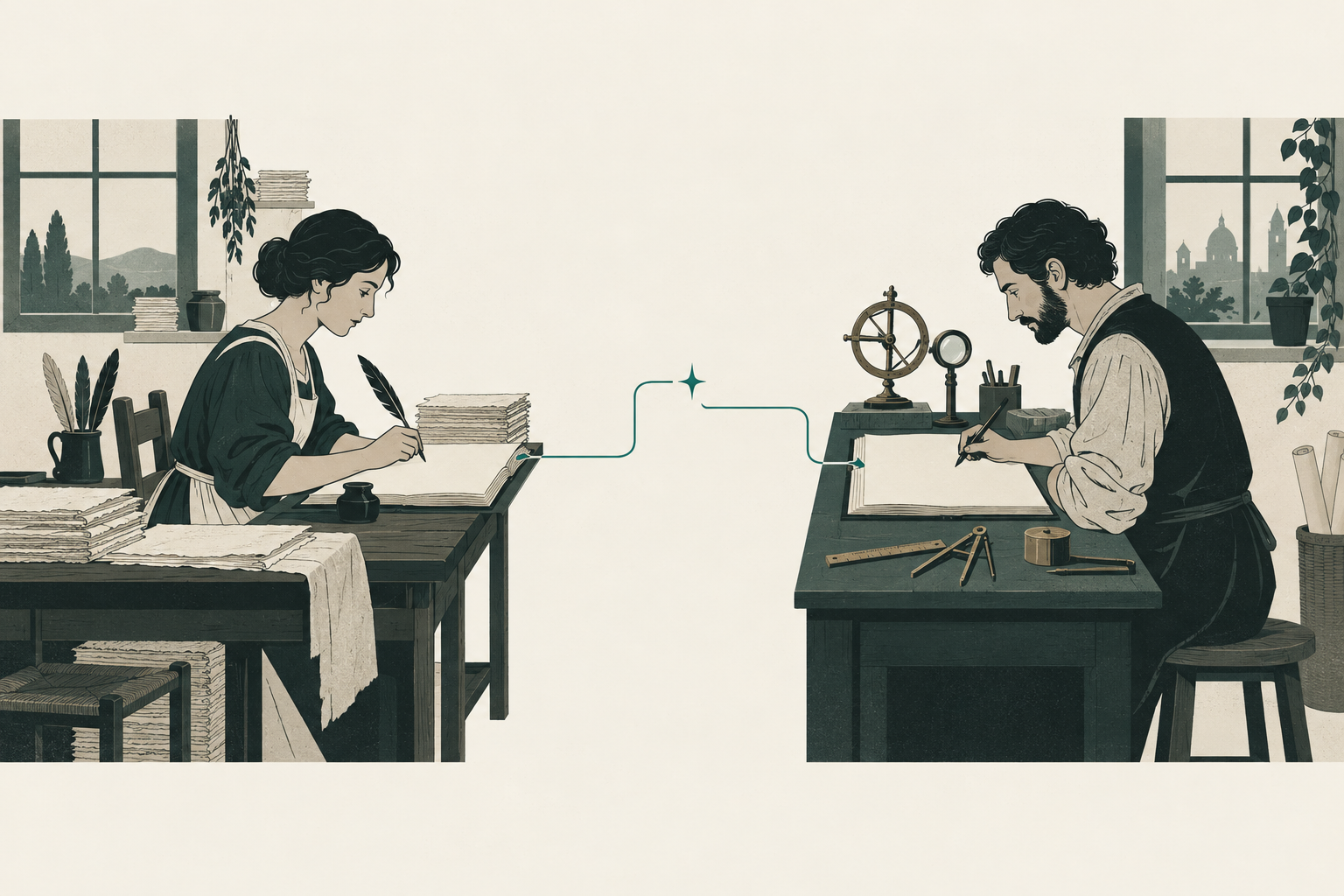
Connected record
The Chronicles of Renaissance Scribes
Explore the character, world, plot, research, and honest development status behind The Chronicles of Renaissance Scribes.
Open recordField notes
Craft and research notes connected to this record.

Connected record
How to Build a Historical-Fantasy World from Records, Materials, and Access
Build a historical-fantasy world by mapping materials, access, authority, cost, and one speculative rule, with a practical worked example.
Open record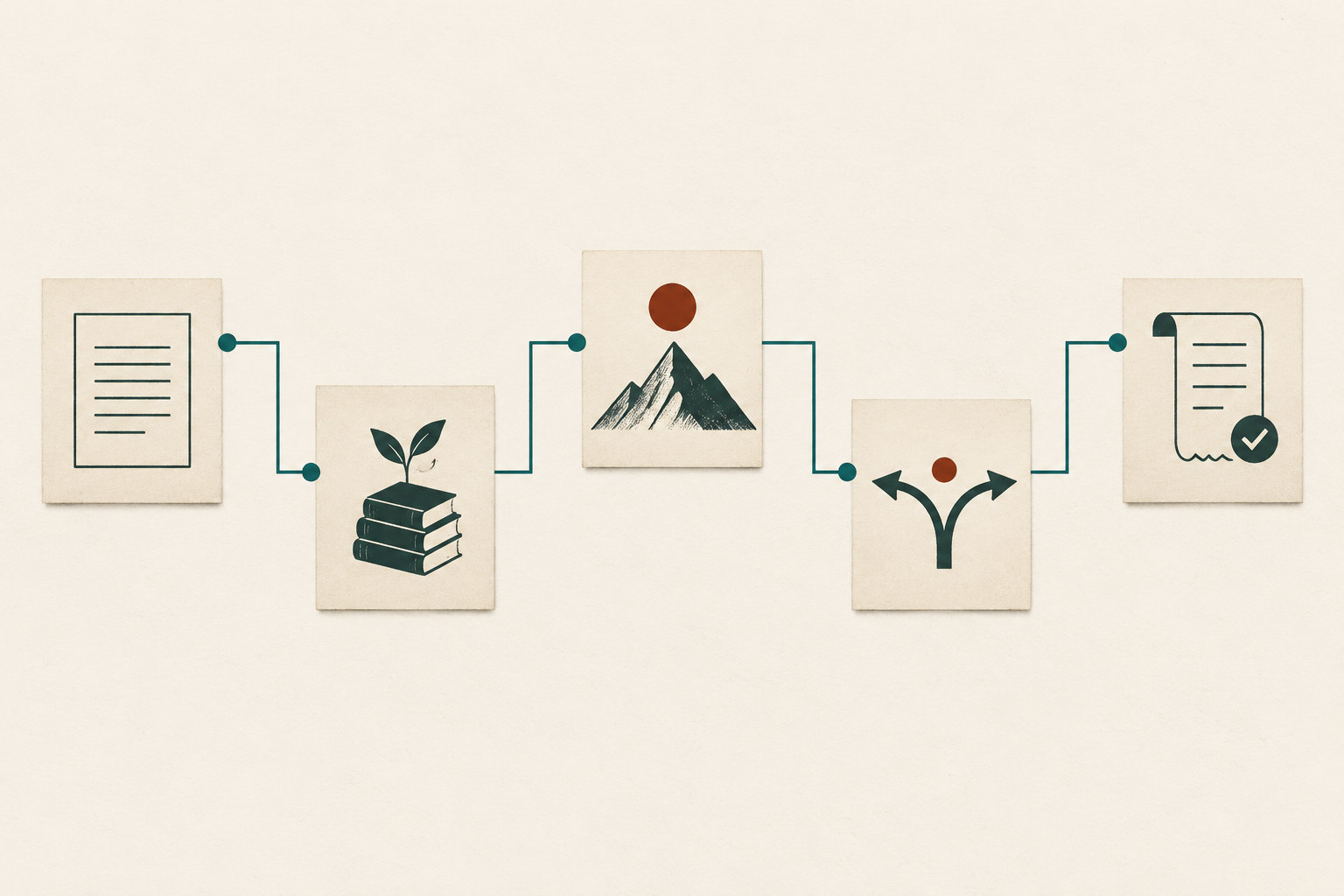
Connected record
A Plot Structure Example Built with Because/Therefore Causality
Use because/therefore causality to turn a premise into a plot where every choice closes an option and creates the next problem.
Open record
Connected record
What Belongs in a Character Sheet for a Novel?
Build a novel character sheet that tracks goals, conflict, voice, relationships, knowledge, continuity, and change without collecting trivia.
Open record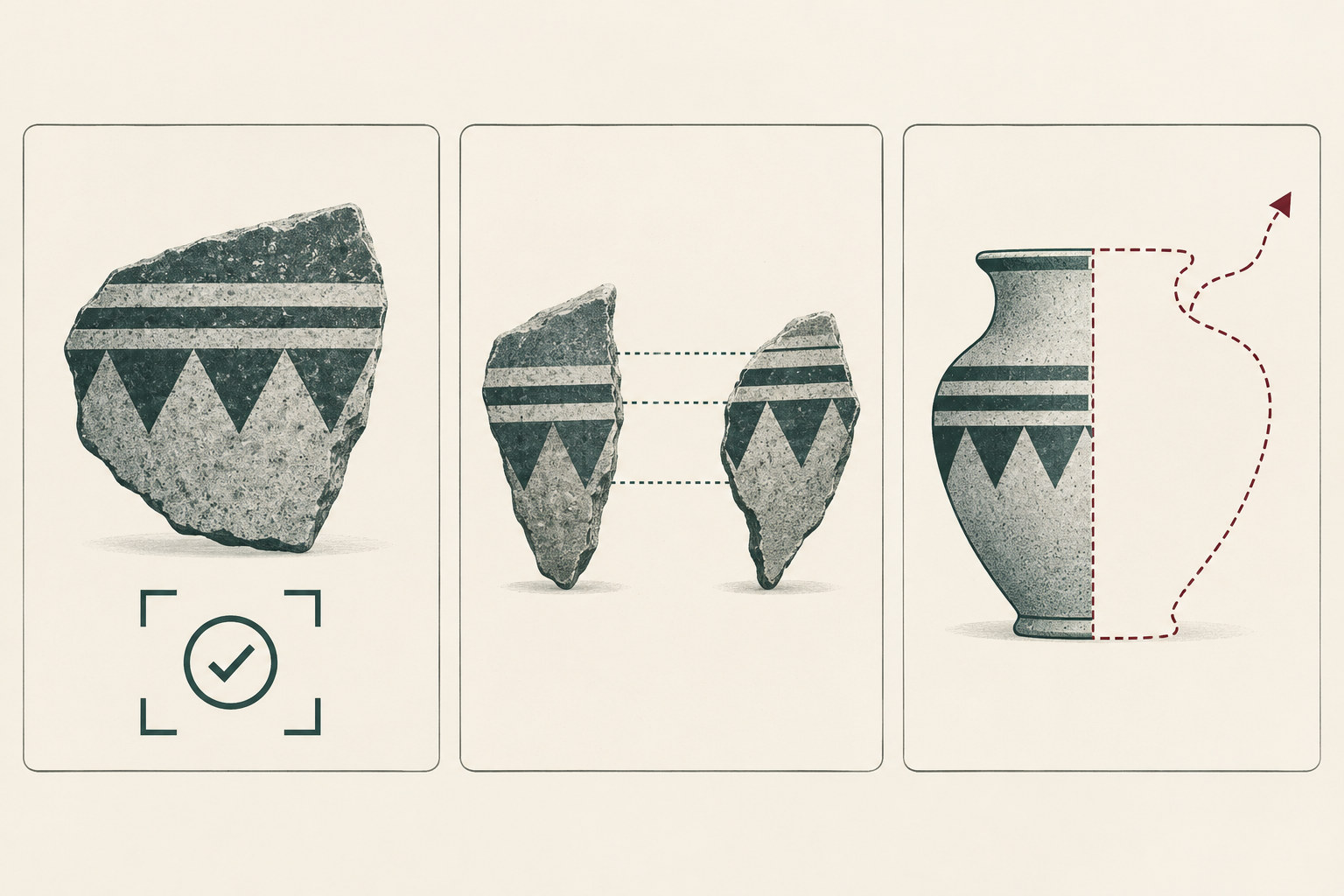
Connected record
How to Separate Historical Fact, Inference, and Invention
Use a claim-level fact, inference, and invention ledger to research historical fantasy honestly without surrendering imaginative freedom.
Open record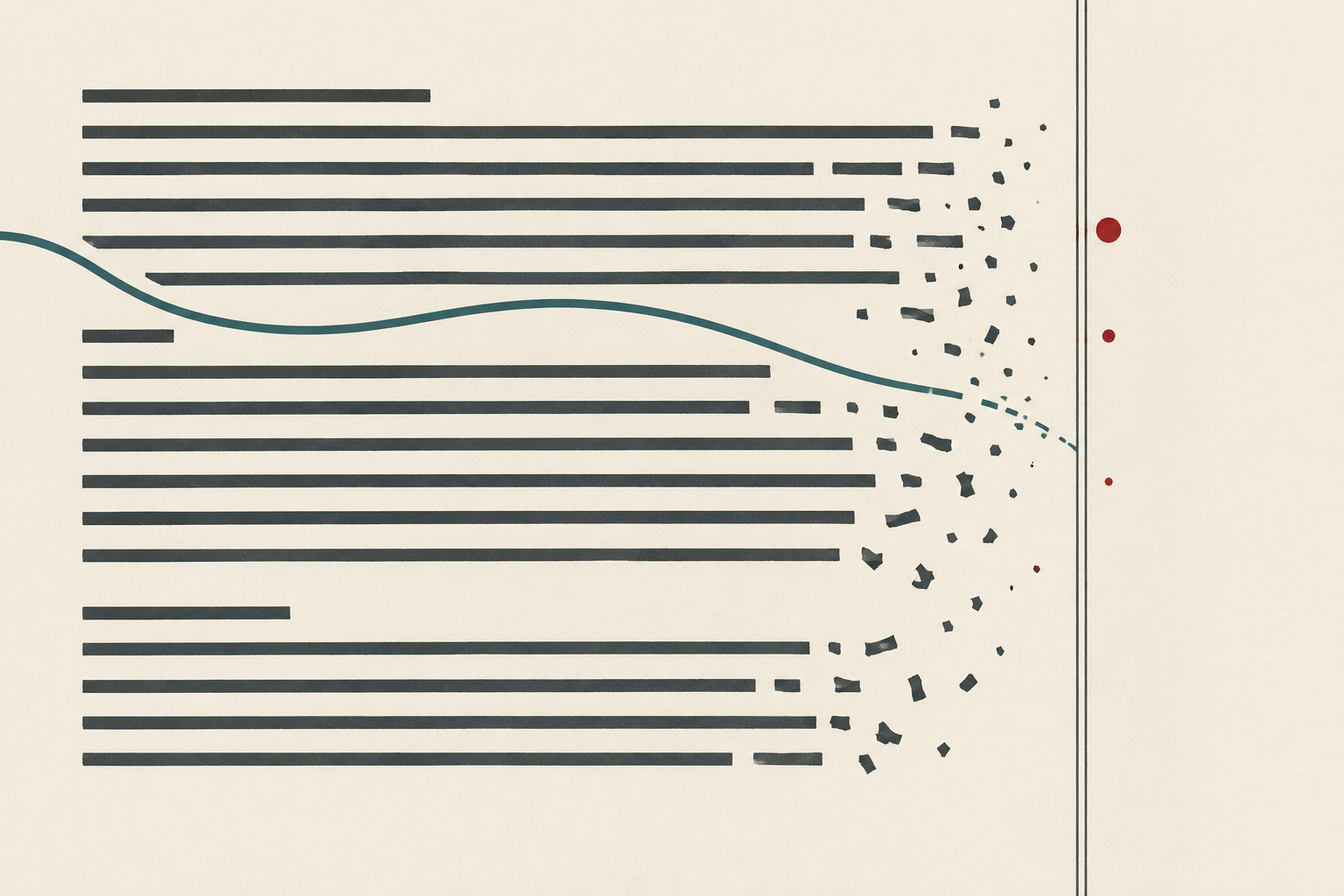
Connected record
Magic with a Cost: Designing Rules That Create Story Choices
Design a fantasy magic system whose channel, limits, access, and cost create difficult character choices instead of convenient solutions.
Open record