
Faded Fables register
About Faded Fables
Faded Fables is an illustrated fiction workshop and story atlas. It makes the machinery of a tale explorable: the person under pressure, the world that pushes back, and the chain of choices that turns a premise into a plot.
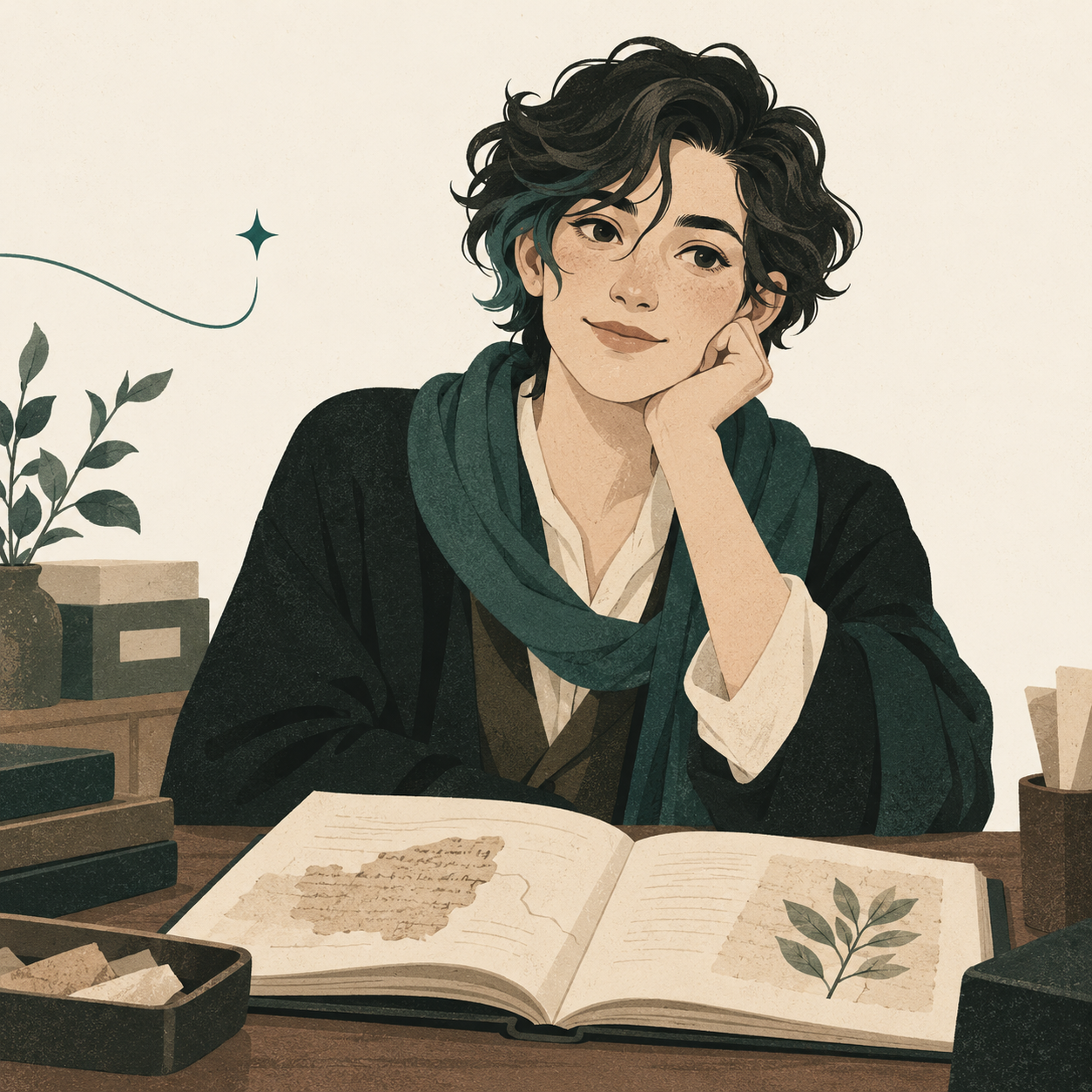
First, a plain disclosure
Wren the Wisp is the fictional archivist-editor and narrative guide of Faded Fables. Wren is not a real historian, credentialed scholar, eyewitness, customer, or independent reviewer. The persona gives the archive a consistent voice; it does not replace sources, editorial responsibility, or disclosure of AI-assisted work.
The catalogue of histories that nearly happened
In the fiction of the site, Wren tends an impossible reading room for fragments too strange for the official record and too promising to remain only a premise. A misplaced cipher, unfinished flight plan, court rumour, or experiment in the margin arrives as a faded trace.
Wren does not declare the trace true. Each promising fragment is filed three ways:
- The person under pressure: what the character wants, fears, misunderstands, and may choose.
- The world that pushes back: its material conditions, culture, institutions, history, and rules of wonder.
- The chain of consequence: the causal turns that make a premise become a plot.
When those records align, the route turns left and opens into a story. Some routes become complete short fiction. Some remain explorable. A few grow into books.
What the archive promises
- The seams stay visible. Documented history, reasoned inference, fictional invention, AI assistance, and affiliate relationships are labelled.
- Every detail earns a function. A trait, magic rule, place detail, or plot turn must create choice, consequence, atmosphere, or meaning.
- Free work is complete work. Articles and short stories deliver a satisfying experience. A paid book offers depth and continuation, not the missing ending.
How the work is made
Faded Fables uses human-directed research, outlining, drafting, editing, and illustration tools. AI tools may assist with ideation, drafting, analysis, or images, but their output is not treated as a source and does not independently author, believe, remember, or verify a story. Historical and factual claims are checked against cited sources; uncertainty stays visible.