
Story dossier · Character → World → Plot → Story
Salem’s Secret Circle
An invented copyist must decide whether exposing how coerced testimony was shaped will protect the vulnerable or deepen the danger around them.
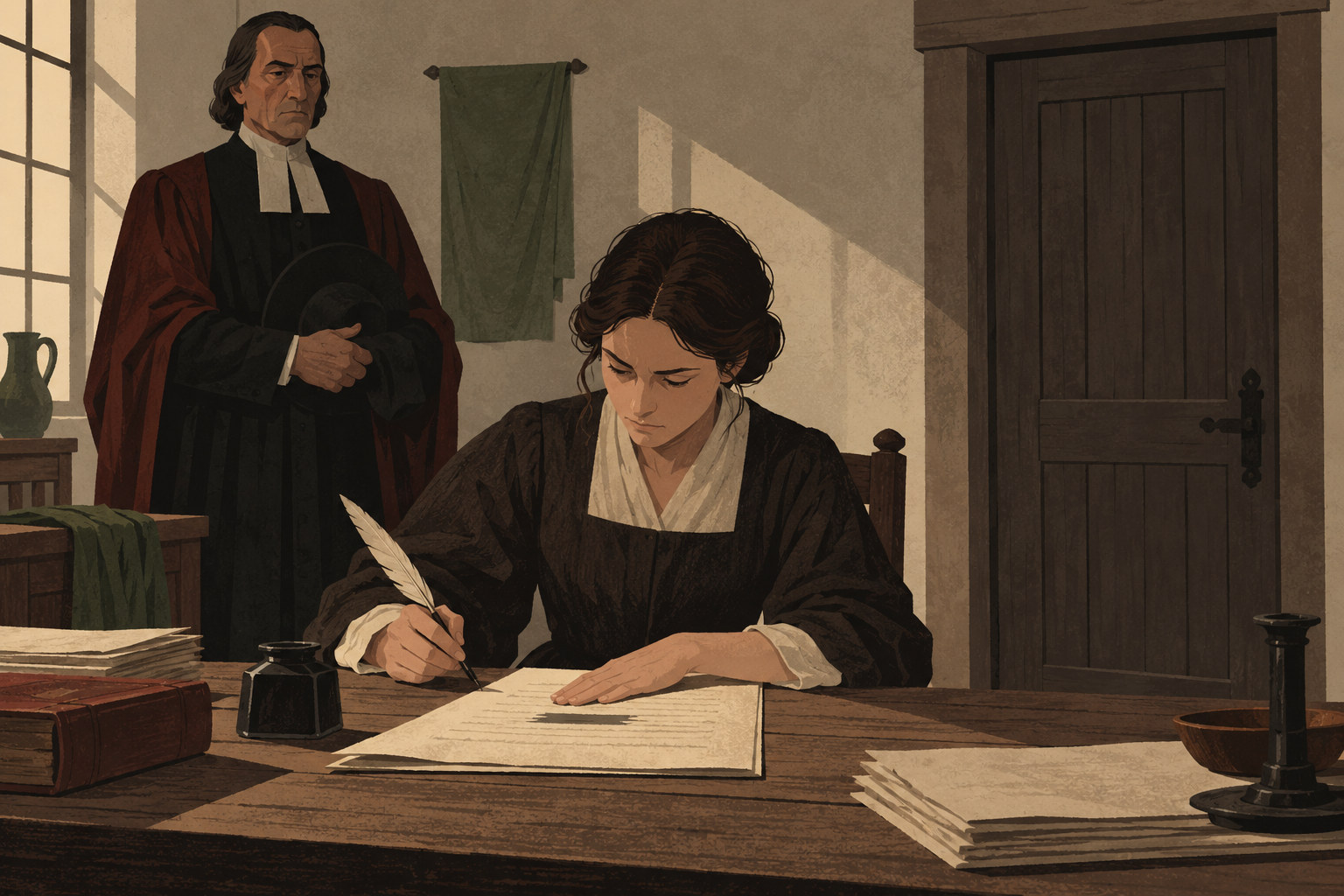
Story record
Historical frame
Salem Village and Salem Town, Massachusetts, 1692.
Reader contract
Restrained historical fantasy centred on testimony, coercion, power, and survival; real victims are not recast as antagonists or proven witches.
Story context
Notice how transcription and context make an original copyist consequential without using fantasy to excuse accusers or imply that historical victims were guilty.
Synopsis
A retracted line returns after an official revision. The copyist follows the discrepancy through ordinary testimony and institutional pressure while resisting interpretations that would turn persecution into proof of magic.
The ingredients
These are the exact public records connected to this Story—not suggestions inferred from tags or matching words.
Character
The person whose choices carry the pressure.
Connected record
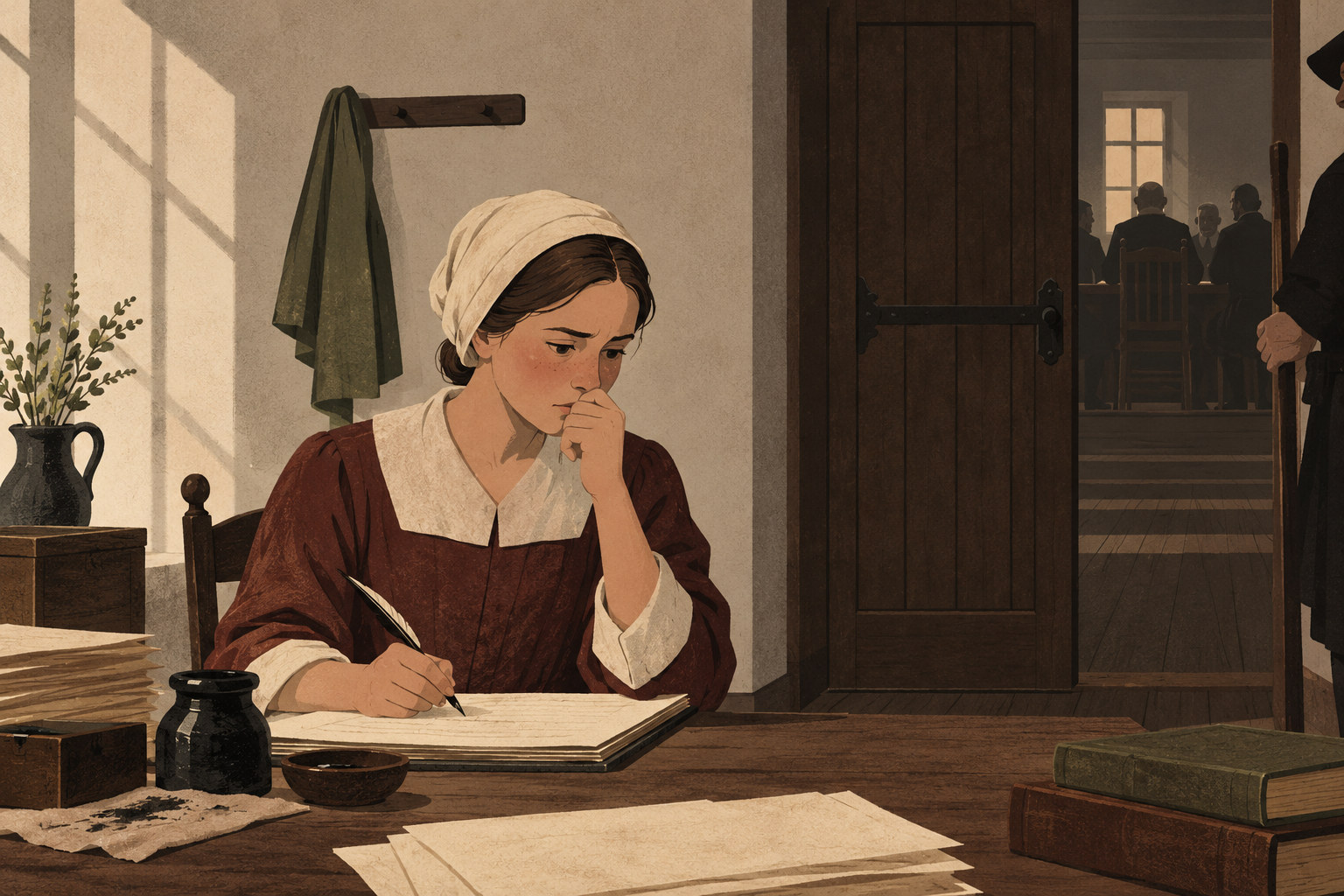
The Deposition Copyist
The Deposition Copyist is a proposed original witness whose job is to turn frightened, coerced, and contradictory speech into records that authorities can use.
Open recordWorld
The inhabited system that makes the choice costly.
Connected record
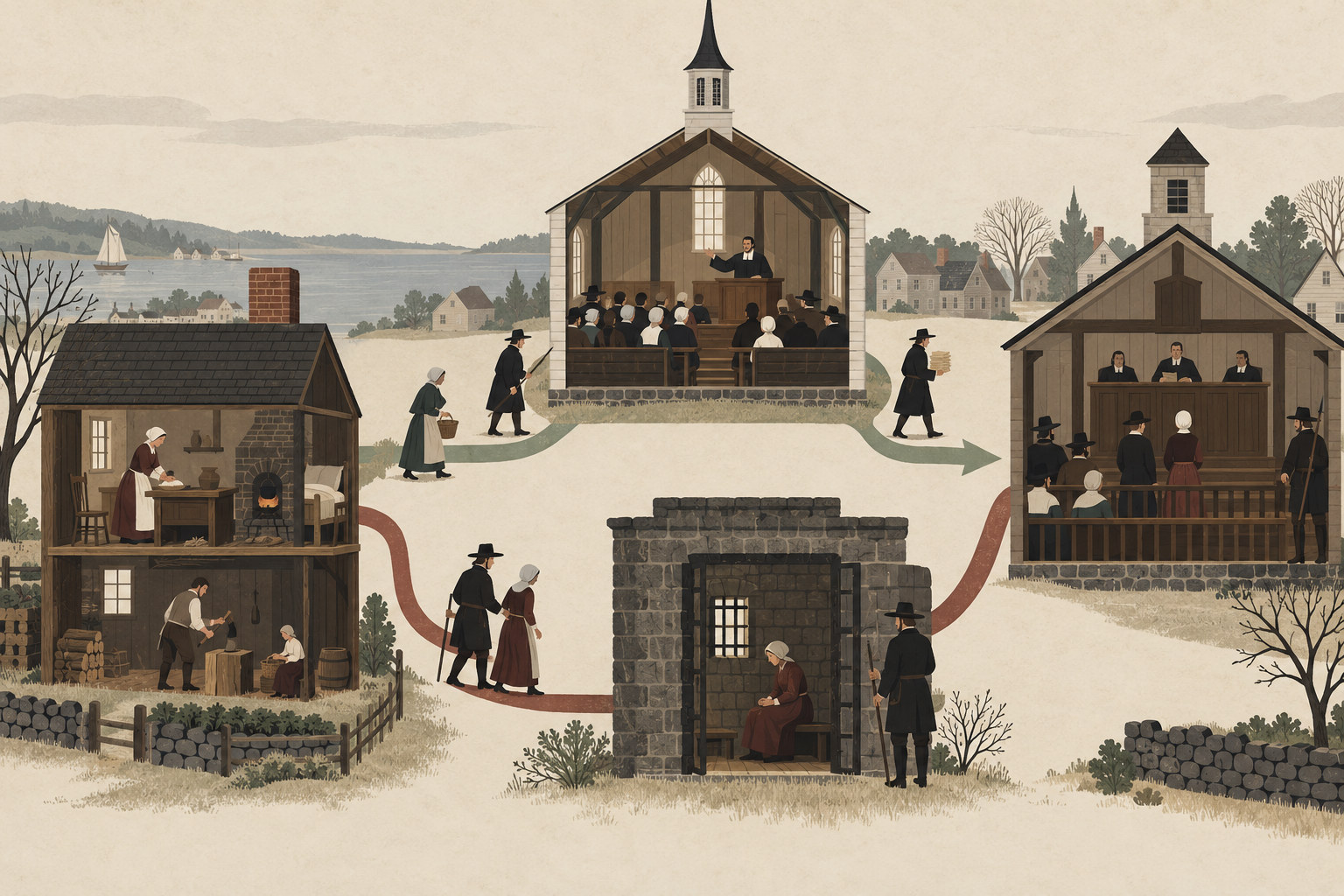
The Village That Makes Evidence
This world begins with documented social and judicial violence in 1692, not a battle between colourful covens. Its speculative element must never excuse accusers or imply that the executed were guilty of real witchcraft.
Open recordPlot
The causal route that turns pressure into consequence.
Connected record
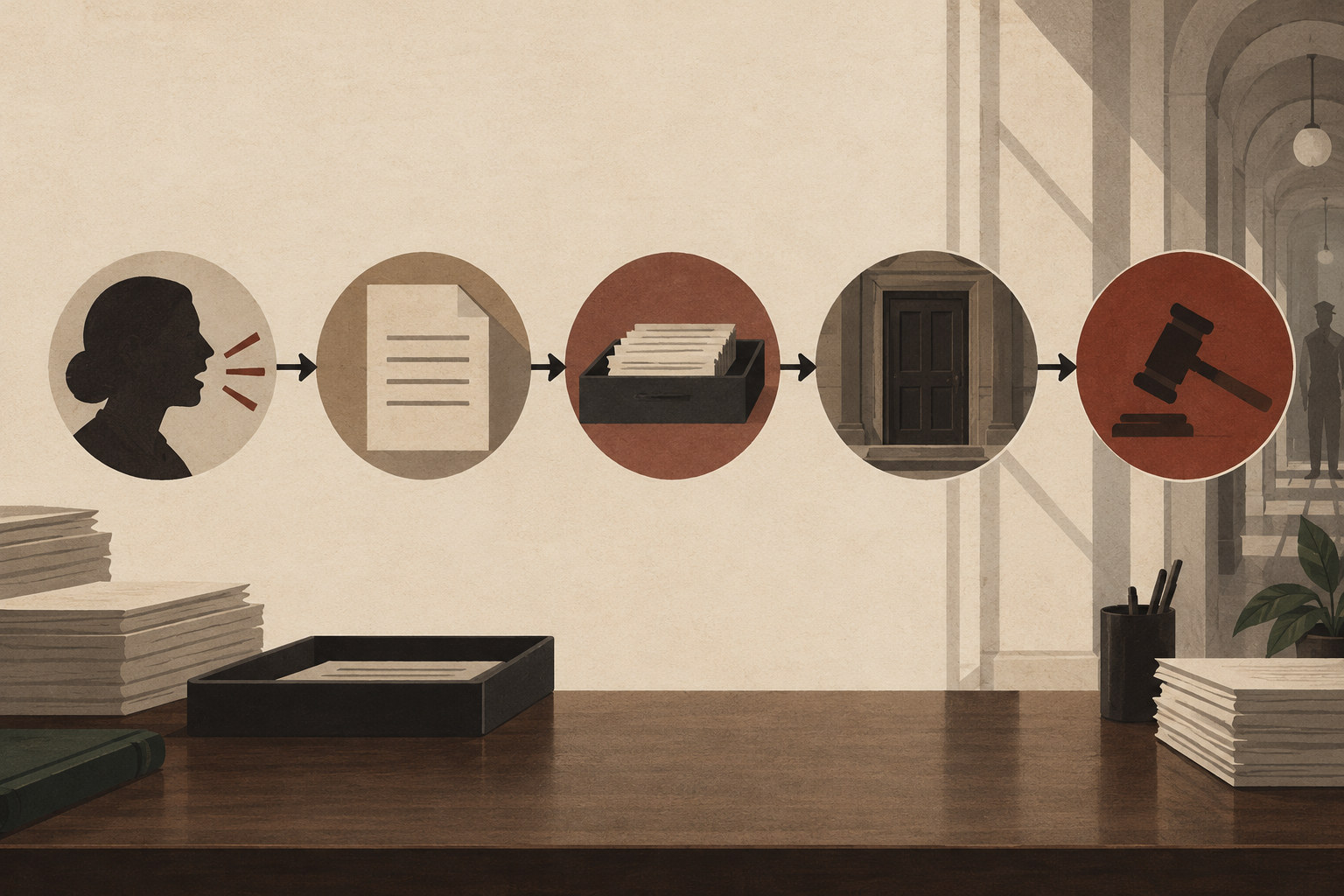
The Testimony That Cannot Be Cleansed
Because the copyist checks the original, they discover the speaker’s hesitation was omitted. Therefore preserving it becomes disobedience. Because a private correction would be easy to dismiss, the copyist seeks corroborating ordinary testimony. Therefore anot
Open recordEditions and field notes
Publications
No linked public record is available yet. The route remains open while the dossier is being catalogued.
Field notes
Connected record
How to Write Historical Figures as Characters Without Turning Them into Costumes
Build historical characters from documented constraints, competing motives, period-shaped assumptions, and clearly labelled invention.
Open recordRead
The approved public story or excerpt appears here as the canonical WordPress body.
Story record
An invented copyist finds that a coerced statement returns after an official revision. Preserving the contradiction could expose how testimony is being shaped, but publicizing an impossible page could deepen the panic and endanger the people the copyist hopes to protect.
- Current public form: redevelopment dossier; no approved fiction.
- Legacy evidence: earlier audit recorded a 2,676-word lore book.
- Period: Massachusetts, 1692.
- Reader contract: restrained historical fantasy centred on testimony, coercion, power, and survival. The real victims are not recast as fantasy antagonists or proven witches.
The ingredients
- The Deposition Copyist supplies an original, accountable viewpoint.
- The Village That Makes Evidence keeps institutional power central.
- The Testimony That Cannot Be Cleansed makes record-making causal.
Read
The Word Beneath the Scrape (not yet published) is a complete editorial concept draft testing record-making, coercion, and a costly intervention. It remains unavailable until primary-source research, sensitivity review, and human approval pass.
Record and invention
The trials, Tituba, Bridget Bishop, and documented court actions are historical. The copyist and anomalous page are inventions. The story must name uncertainty and avoid claims about Tituba’s origins beyond supported scholarship.
Development status
This cluster has the strictest pre-drafting gate: specialist research and sensitivity review come before mechanism approval, scene planning, or a concept short. It is not a novel.
Books and editions
The legacy Publication draft (not yet published) remains verification-blocked.
From short story to novel route
What a longer work would deepen
A longer work requires primary-source and sensitivity review, a historically plausible role, approved mechanism and lead, human-approved concept short, and private ending and scene plans.
Work still open
Primary-source and sensitivity review, exact role and access, identity and household position, mechanism decision, private ending and scene map, and human approval remain open.
Record and invention
The trials, Tituba, Bridget Bishop, and documented court actions are historical. The copyist and anomalous page are inventions.
Editorial process
This redevelopment record and non-canon concept short were produced through source-backed research and AI-assisted editorial drafting; specialist, sensitivity, historical, editorial, and human approval remain pending.
Source status
See the Salem Witch Museum starting sources and unresolved scholarship needs in the cluster research package.