
Story dossier · Character → World → Plot → Story
The Ciphers of Bletchley Park
An original signals clerk must decide whether useful information can justify trusting a sender no one can identify.
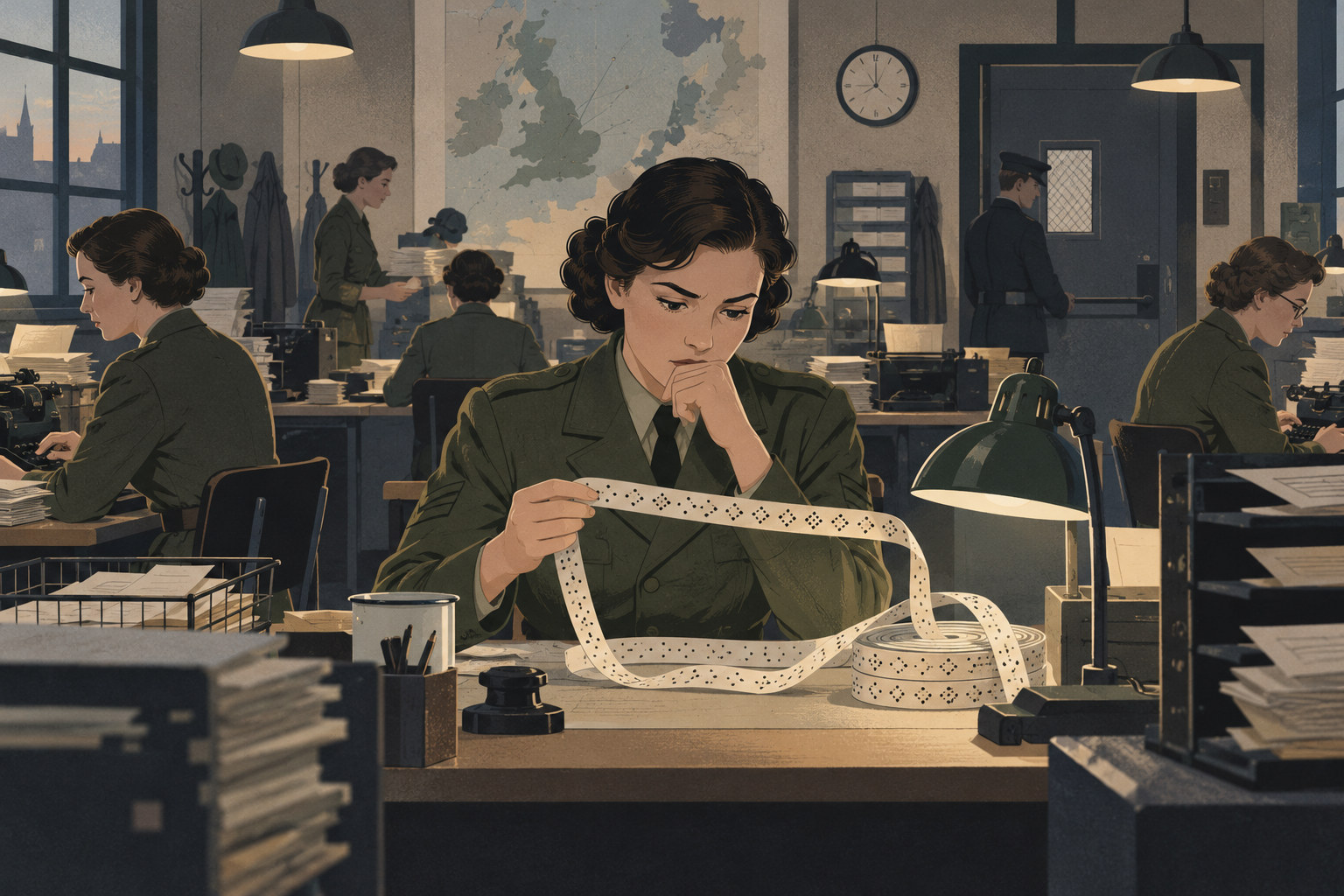
Story record
Historical frame
Wartime Bletchley Park; exact year, section, service, and workflow remain open.
Reader contract
Procedural historical fantasy about interpretation and secrecy, with documented contributors credited accurately and no fictional lead assigned their achievements.
Story context
Notice how narrow knowledge, classification, delay, and provenance create agency for an original clerk without turning that clerk into a hidden inventor or sole codebreaker.
Synopsis
A discarded group matches later authenticated traffic. As limited use changes the messages that follow, a clerk with only partial knowledge must decide whether routing another anomaly protects lives or exposes the system to an unknown intelligence.
The ingredients
These are the exact public records connected to this Story—not suggestions inferred from tags or matching words.
Character
The person whose choices carry the pressure.
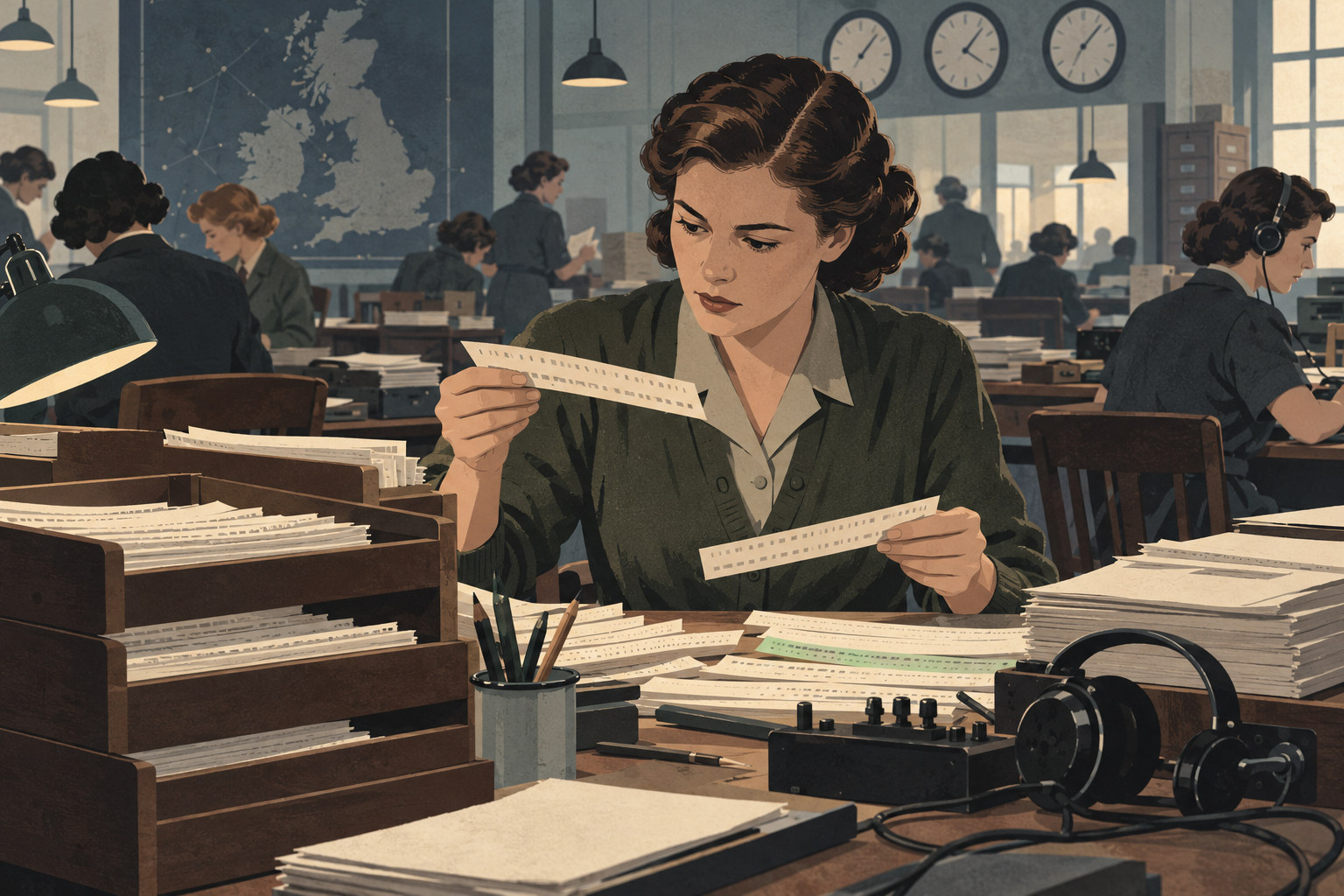
Connected record
The Signals Clerk
The Signals Clerk is a proposed original viewpoint with a deliberately narrow field of knowledge. The character routes intercepted traffic through an ordinary system and notices a pattern that does not fit its date.
Open recordWorld
The inhabited system that makes the choice costly.
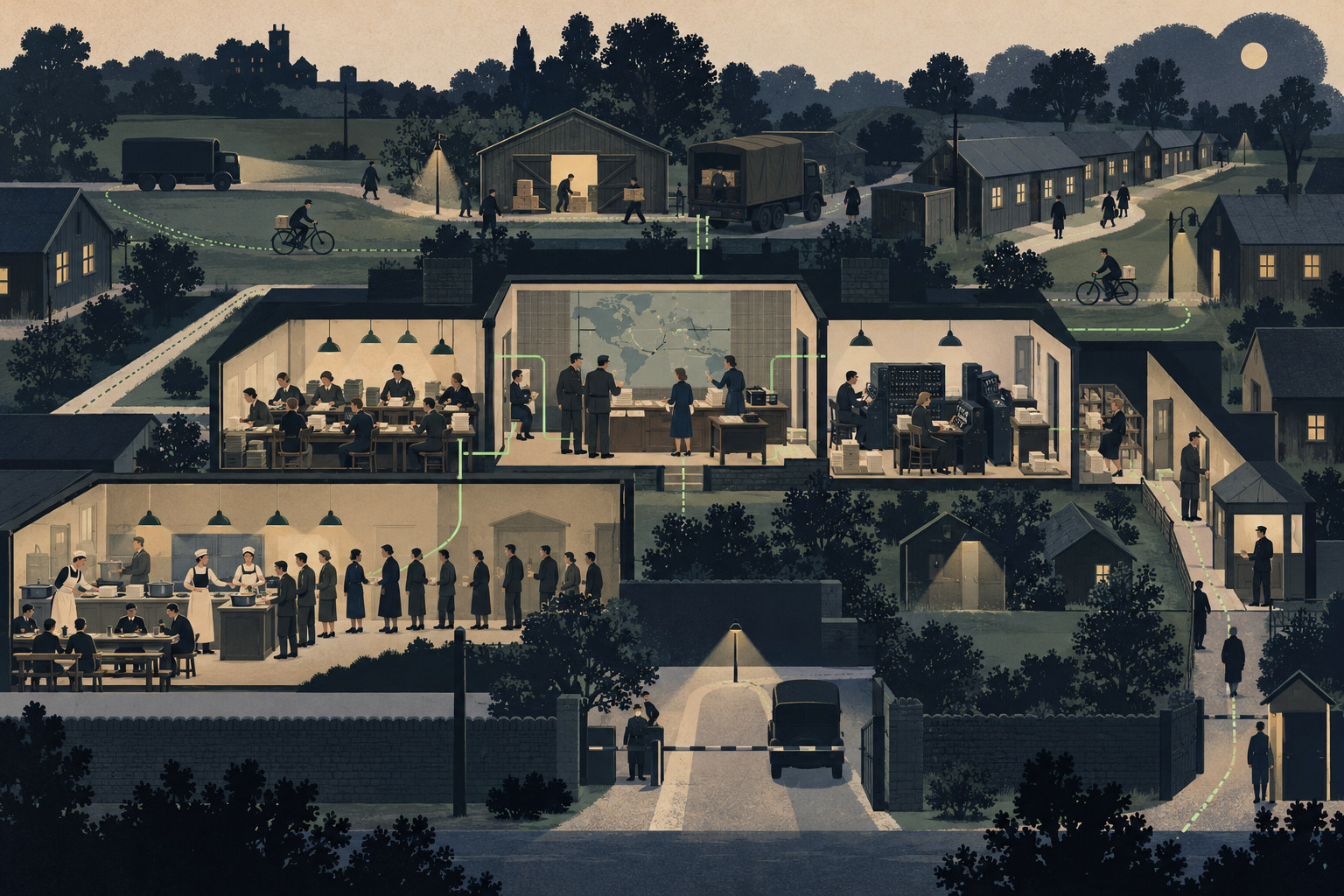
Connected record
The Listening War
This proposed world treats Bletchley Park as a large, compartmentalized workplace rather than a room containing two famous codebreakers.
Open recordPlot
The causal route that turns pressure into consequence.
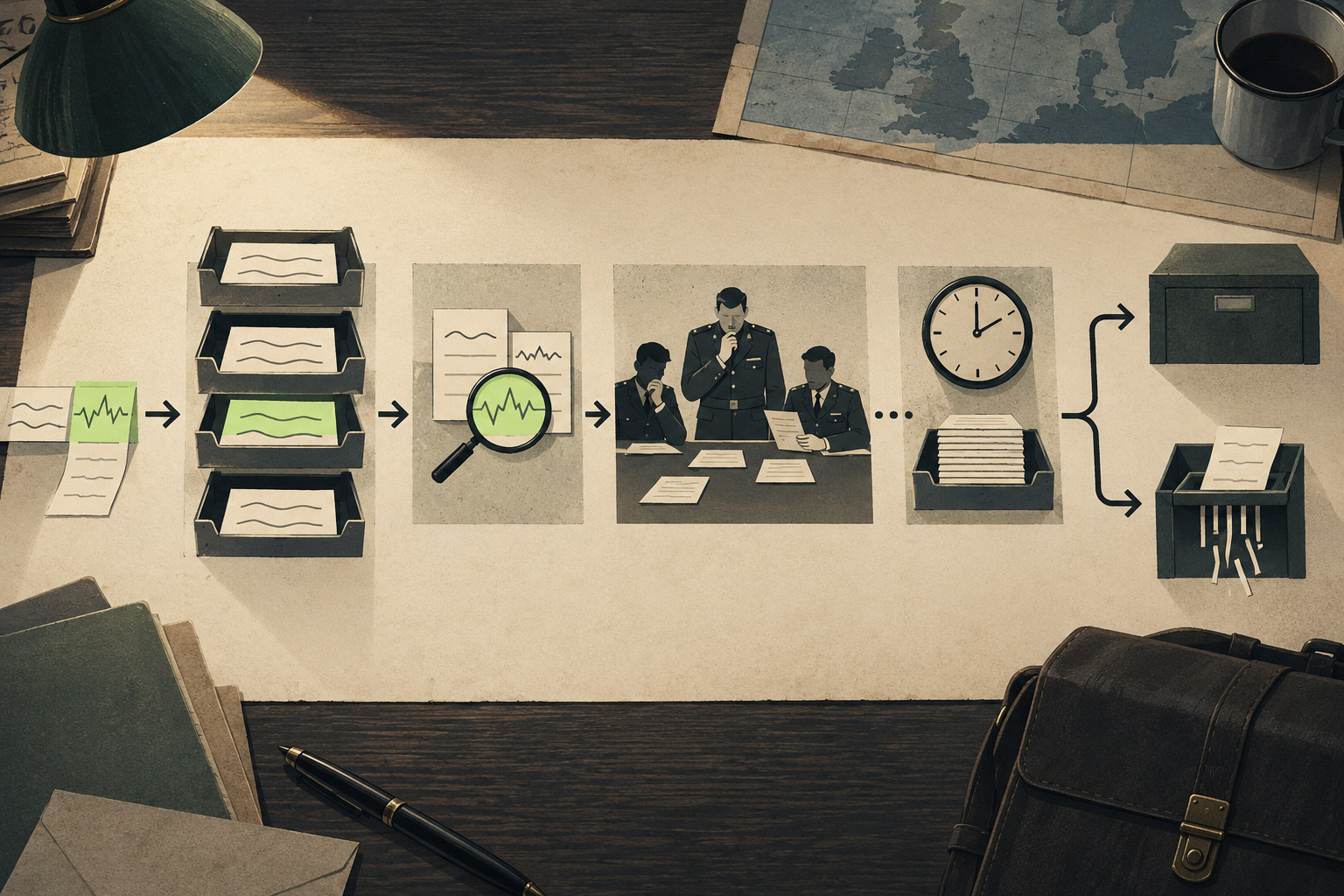
Connected record
The Signal That Knows Tomorrow
Because the first match could be coincidence, the clerk preserves the discarded sheet. Therefore a second match can be tested. Because the anomaly predicts a useful detail, a supervisor authorizes a limited operational use. Therefore the sender learns—or appea
Open recordEditions and field notes
Publications
No linked public record is available yet. The route remains open while the dossier is being catalogued.
Field notes
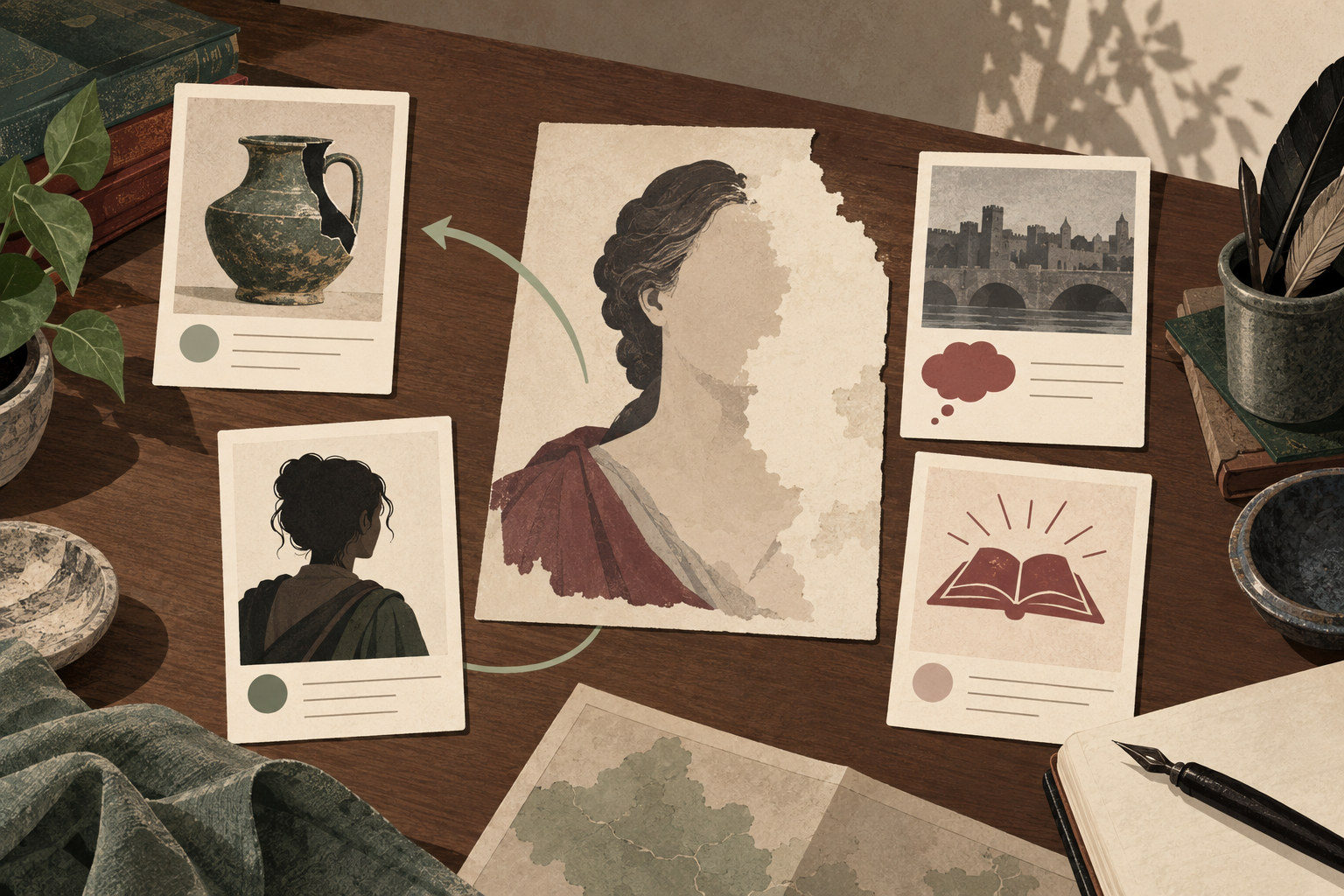
Connected record
How to Write Historical Figures as Characters Without Turning Them into Costumes
Build historical characters from documented constraints, competing motives, period-shaped assumptions, and clearly labelled invention.
Open recordRead
The approved public story or excerpt appears here as the canonical WordPress body.
Story record
An original signals clerk notices that a discarded group becomes meaningful only after the next day’s intercept. When the anomaly proves useful, the clerk must decide whether operational value can justify trusting a sender no one can identify.
- Current public form: redevelopment dossier; no approved story sample.
- Legacy evidence: earlier audit recorded a 2,280-word lore book.
- Period: wartime Bletchley Park; exact year and section unresolved.
- Reader contract: procedural historical fantasy about interpretation and secrecy, with documented contributors credited accurately.
The ingredients
- The Signals Clerk supplies bounded original agency.
- The Listening War makes compartmentalized labor visible.
- The Signal That Knows Tomorrow turns useful information into an ethical risk.
Read
The Group Marked Tomorrow (not yet published) is a complete editorial concept draft testing bounded knowledge, provenance, and an operationally costly choice. It is not human-approved canon and remains unavailable for staging.
Record and invention
Bletchley Park, Turing, Clarke, Polish contributions, and wartime codebreaking are historical. The clerk and future-linked signal are inventions.
Development status
The cluster requires an exact role/year, procedural research, locked signal rules, concept short, ending, scene map, and credit review. It is not a novel.
Books and editions
The legacy Publication draft (not yet published) has no verified CTA.
From short story to novel route
What a longer work would deepen
A longer work requires an exact year, section and workflow, locked signal rules, credit review, an approved lead and concept short, and private ending and scene plans.
Work still open
Exact role, year, section, service status, workflow, information boundary, signal rules, credit review, private ending and scene map, and human approval remain open.
Record and invention
Bletchley Park, Turing, Clarke, Polish contributions, and wartime codebreaking are historical. The clerk and temporal signal are inventions.
Editorial process
This redevelopment record and non-canon concept short were produced through source-backed research and AI-assisted editorial drafting; procedural, historical, editorial, continuity, and human approval remain pending.
Source status
See the IWM and Bletchley Park sources and their limits in the cluster research package.