
Character dossier
The Signals Clerk
A public character record: motivation, pressure, choice, and documented historical context.
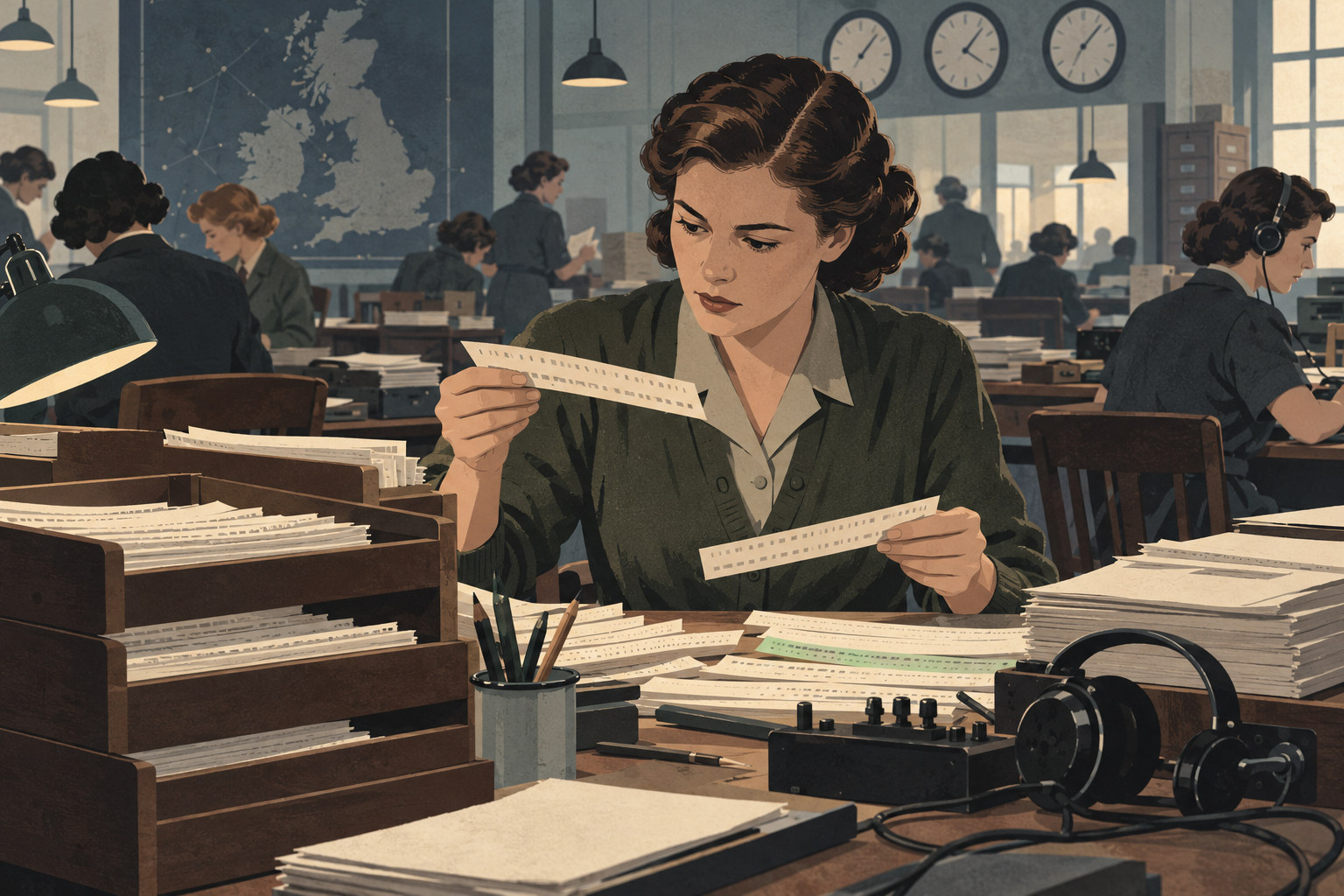
The public dossier
The Signals Clerk is a proposed original viewpoint with a deliberately narrow field of knowledge. The character routes intercepted traffic through an ordinary system and notices a pattern that does not fit its date.
At a glance
- Desire: make one indispensable contribution without violating the secrecy that protects the work.
- Contradiction: the clerk trusts procedure because it distributes responsibility, but procedure can also bury an urgent anomaly.
- Pressure: an impossible message becomes operationally useful before anyone understands its sender or cost.
- Status: exact service, hut, shift, language skill, name, and rank remain research gates.
Agency and limits
The clerk is not a hidden inventor of the Bombe and does not replace Alan Turing, Joan Clarke, Polish cryptanalysts, engineers, operators, or the wider workforce. Agency comes through classification, escalation, contextual interpretation, and the decision to preserve a message other people want treated as noise.
Relationships under strain
A supervisor values reliable routing; a cryptanalyst values patterns; an intelligence recipient values usefulness; a friend in another compartment cannot be told why the clerk is afraid. Each relationship reveals a different cost of secrecy.
Record and invention
Bletchley Park’s wartime codebreaking and secrecy are historical. The clerk and anomalous traffic are inventions. Exact procedure must be sourced before it appears in a scene.
Development gate
Select the year, section, employment/service status, and information boundary; then verify workflow and create a knowledge schedule that prevents the clerk from knowing the whole war.
Connected records
These cards use the exact relationship IDs recorded for this dossier.
Worlds
The systems that shape this character.
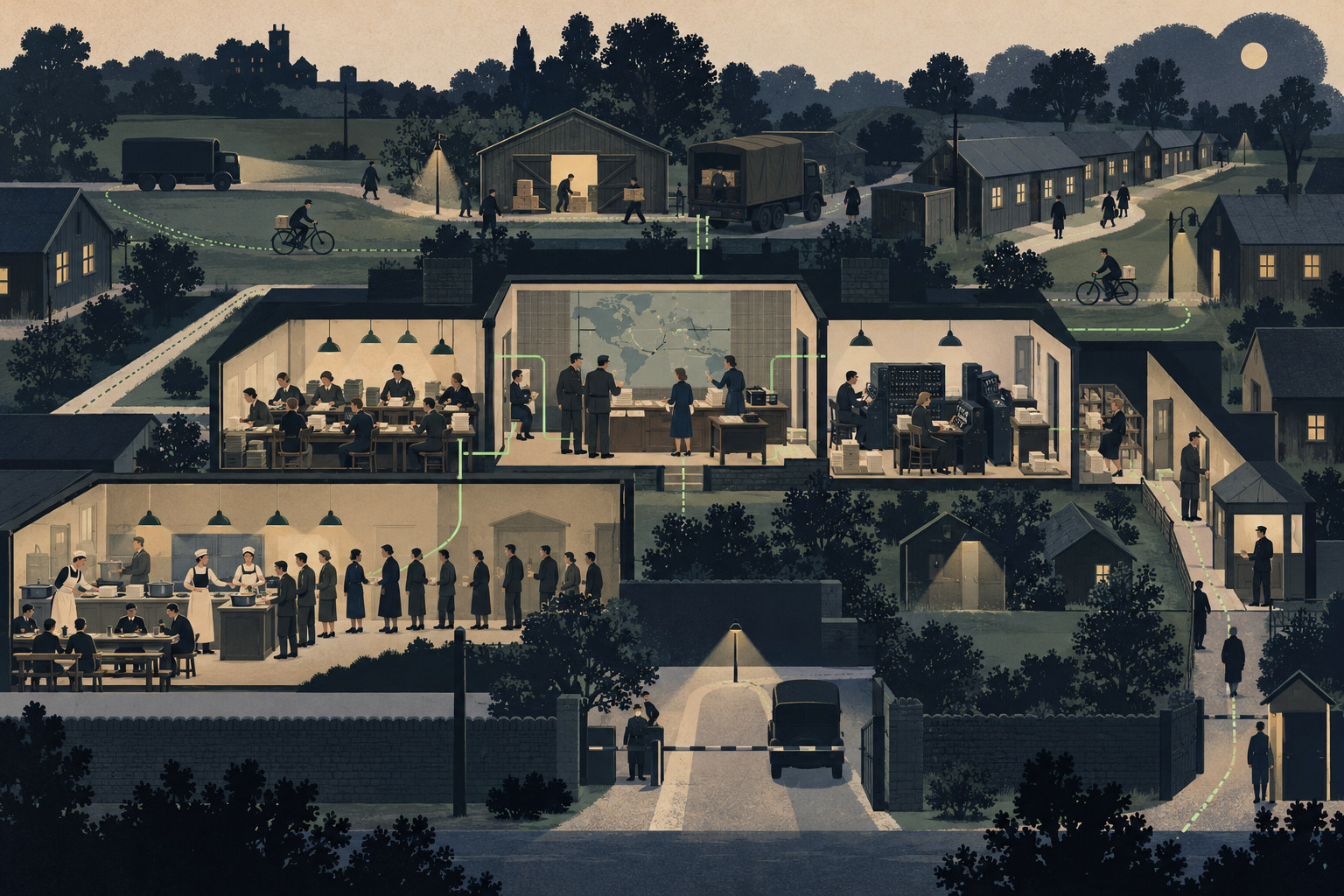
Connected record
The Listening War
This proposed world treats Bletchley Park as a large, compartmentalized workplace rather than a room containing two famous codebreakers.
Open recordPlots
The causal routes that pressure this character.
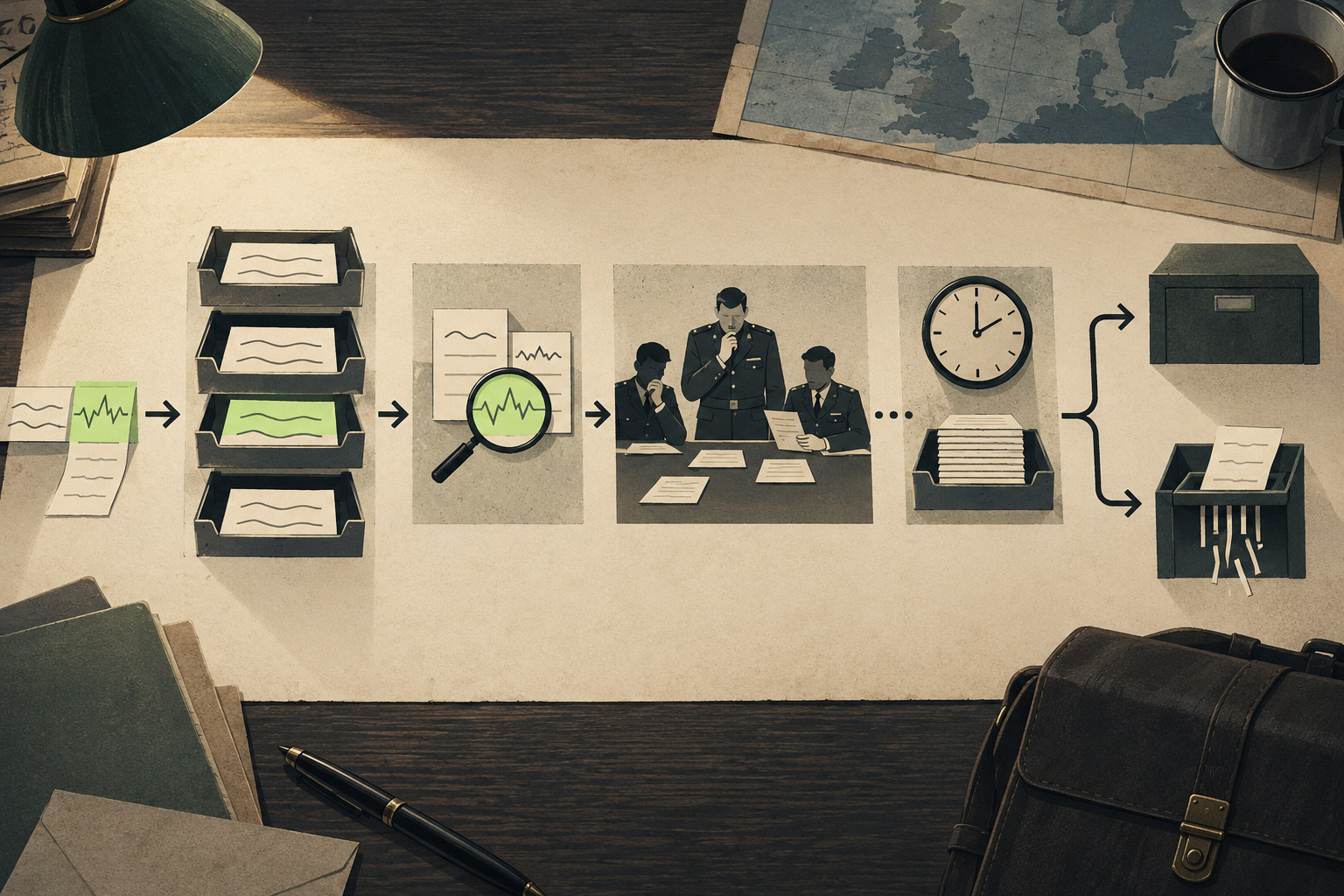
Connected record
The Signal That Knows Tomorrow
Because the first match could be coincidence, the clerk preserves the discarded sheet. Therefore a second match can be tested. Because the anomaly predicts a useful detail, a supervisor authorizes a limited operational use. Therefore the sender learns—or appea
Open recordStories
The stories this character belongs to.
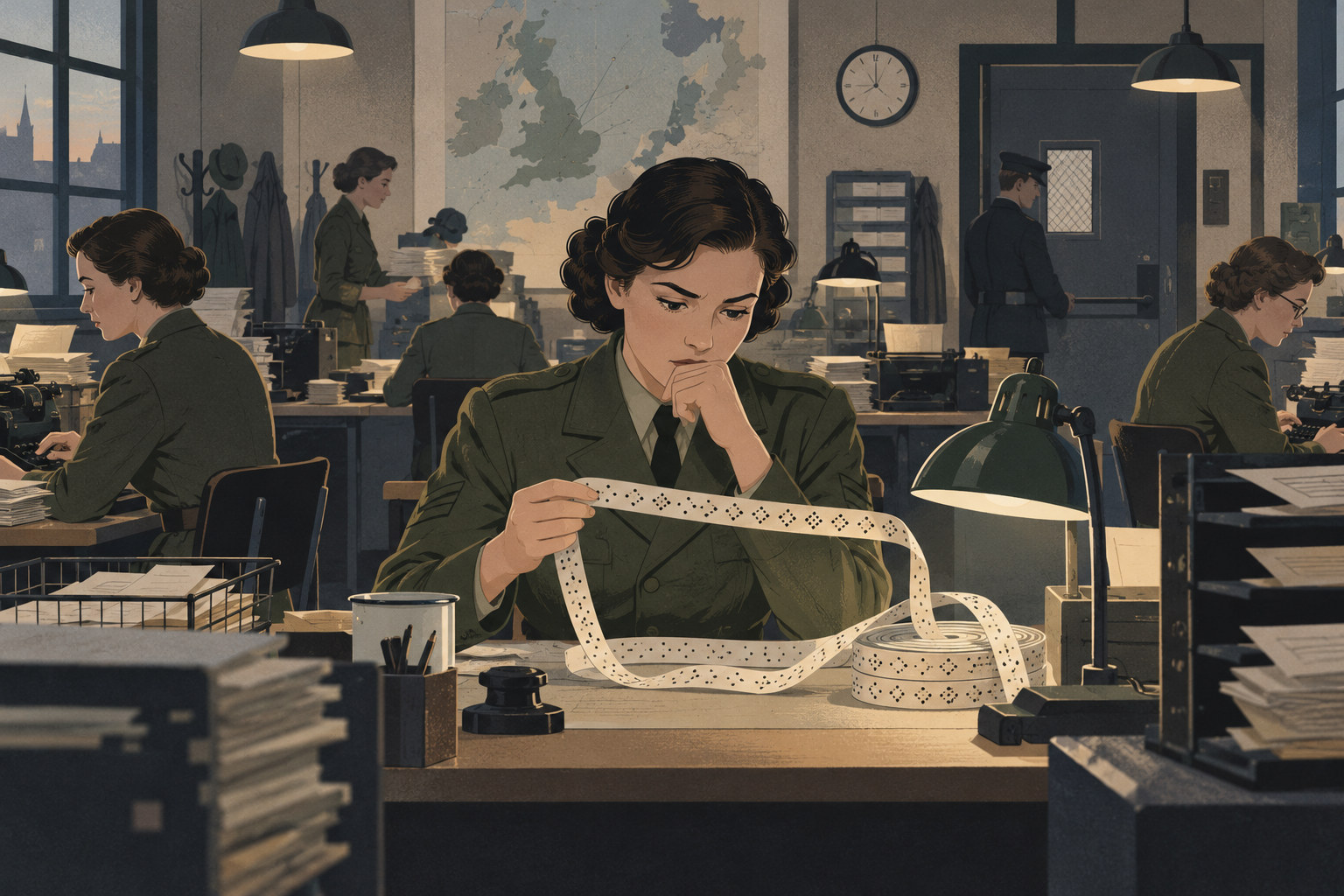
Connected record
The Ciphers of Bletchley Park
An original signals clerk notices that a discarded group becomes meaningful only after the next day’s intercept. When the anomaly proves useful, the clerk must decide whether operational value can justify trusting a sender no one can identify.
Open recordField notes
Craft and research notes connected to this record.

Connected record
How to Write Historical Figures as Characters Without Turning Them into Costumes
Build historical characters from documented constraints, competing motives, period-shaped assumptions, and clearly labelled invention.
Open record