
World dossier
The Listening War
A public world record: place, power, daily life, and the rules that make story choices costly.
The public dossier
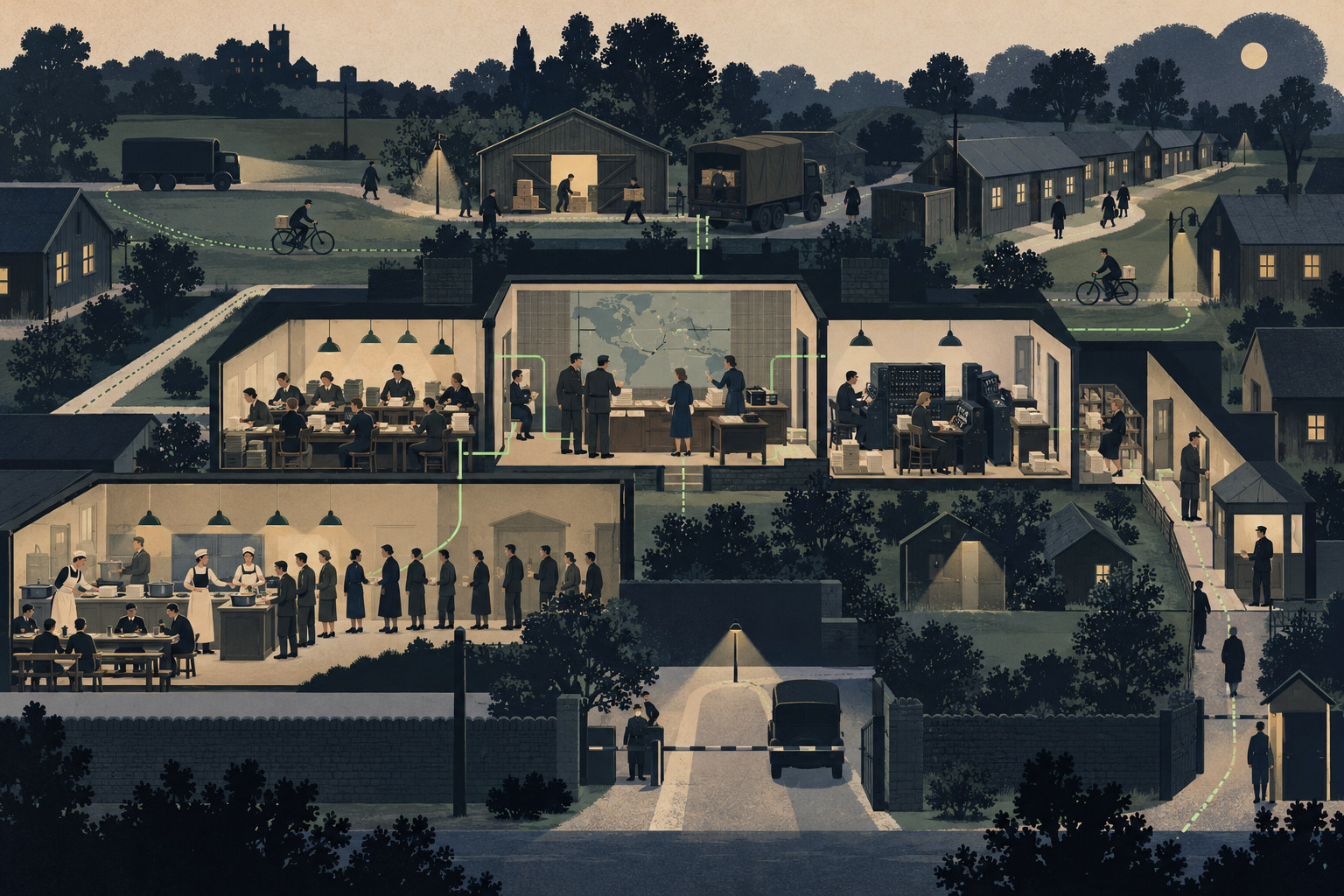
This proposed world treats Bletchley Park as a large, compartmentalized workplace rather than a room containing two famous codebreakers.
At a glance
- Basis: wartime Britain and Bletchley Park operations; exact year remains open.
- Altered condition: one encoded transmission appears to contain information generated after its intercept time.
- Access: clearance, shift, hut, routing instructions, language, machine access, and need to know.
- Cost: acting on the anomaly may protect lives while revealing that intelligence exists or exposing its source.
Equilibrium under threat
Thousands of workers turn intercepted signals into intelligence through specialized steps. Secrecy protects sources and operations but also prevents any one person from seeing the full consequence. An anomalous message threatens the system because its utility encourages use before provenance can be established.
Daily life and power
Queues, paper, punched material, machines, meals, transport, lodging, fatigue, blackout, hierarchy, and repetitive work should shape scenes. Exact huts and technologies change by date; no generic “Bletchley machine” should do every job.
Wonder boundary
The only proposed effect is an encoded message with an impossible temporal relationship. It does not grant clairvoyance, make every cipher readable, replace human analysis, or provide unlimited future information.
Record and invention
Turing’s Hut 8 and Bombe work, prior Polish contributions, and institutional secrecy are documented. The clerk and anomalous layer are invented. Legacy cover portraits are generated art, not authentic likenesses.
Connected records
These cards use the exact relationship IDs recorded for this dossier.
Characters
The people who can act within this world.
Connected record
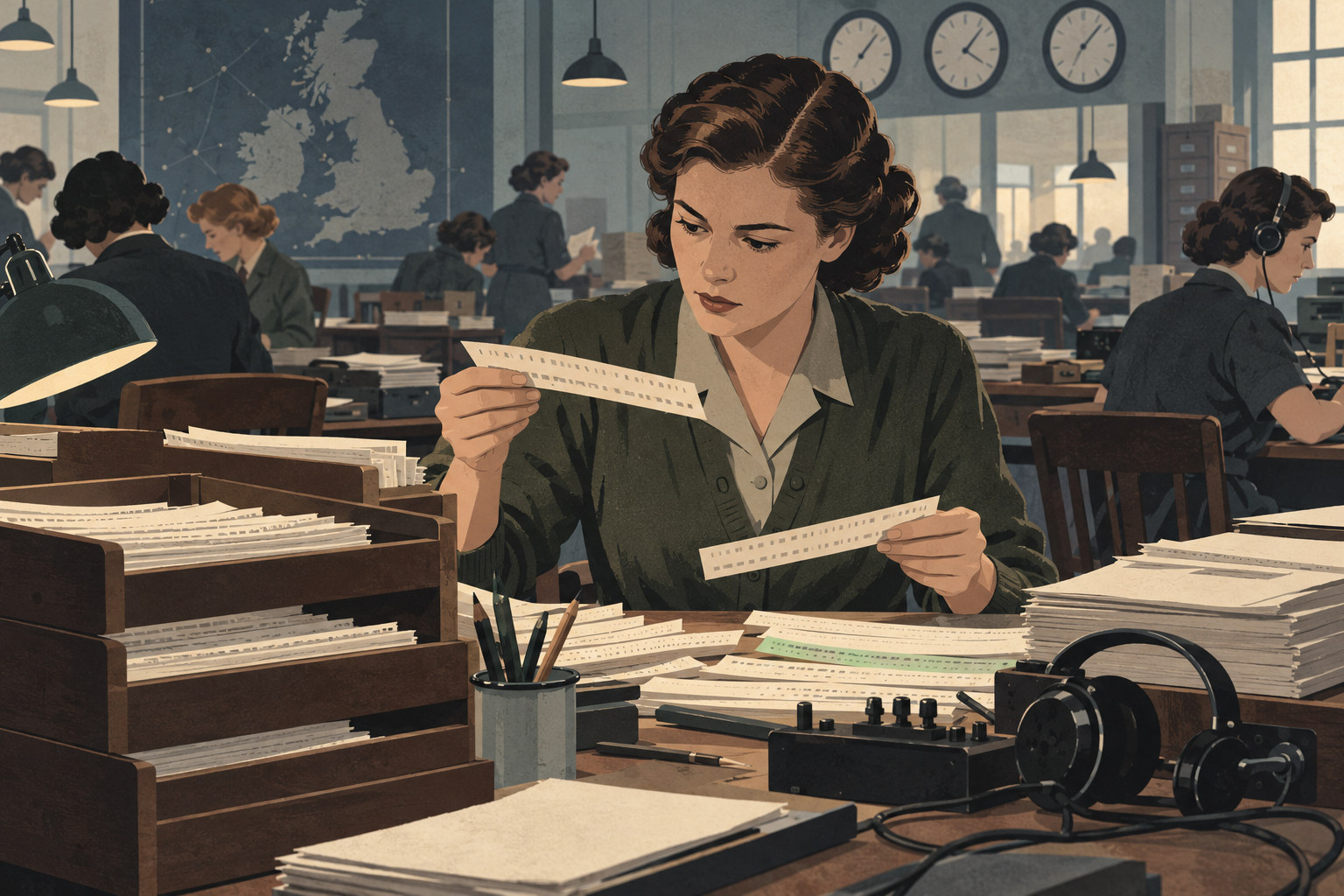
The Signals Clerk
The Signals Clerk is a proposed original viewpoint with a deliberately narrow field of knowledge. The character routes intercepted traffic through an ordinary system and notices a pattern that does not fit its date.
Open recordPlots
The causal routes this world makes possible.
Connected record
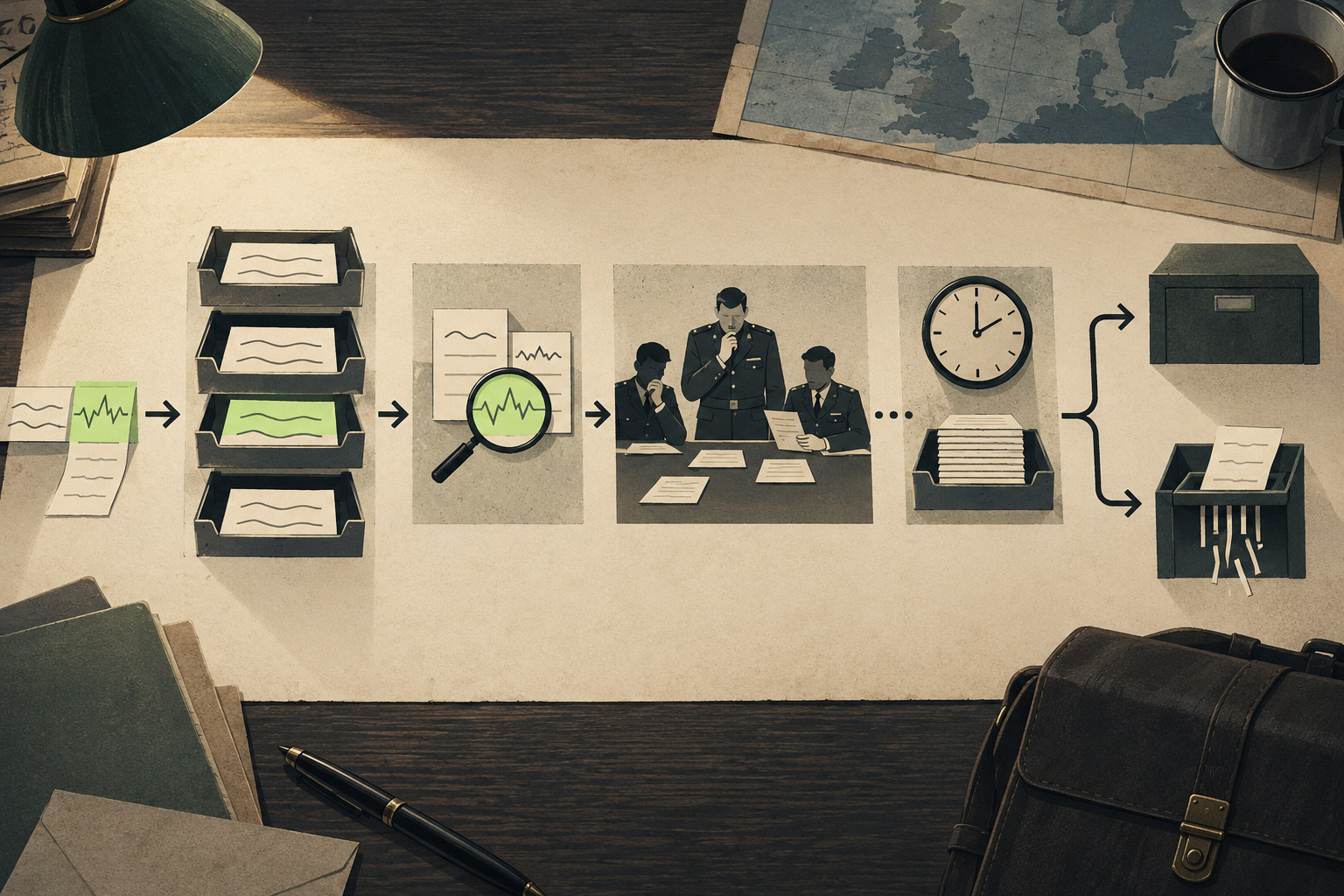
The Signal That Knows Tomorrow
Because the first match could be coincidence, the clerk preserves the discarded sheet. Therefore a second match can be tested. Because the anomaly predicts a useful detail, a supervisor authorizes a limited operational use. Therefore the sender learns—or appea
Open recordStories
The stories that inhabit this world.
Connected record
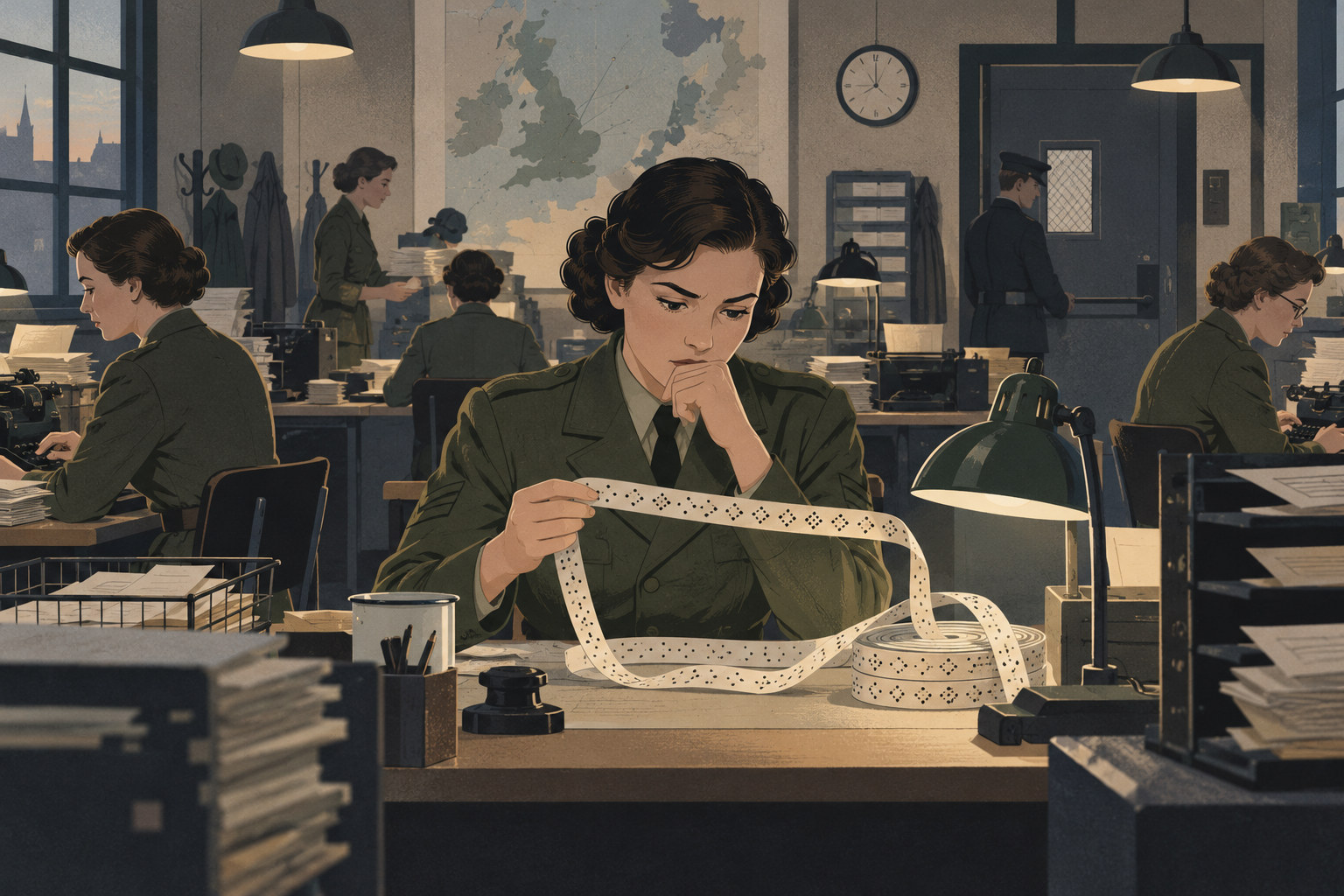
The Ciphers of Bletchley Park
An original signals clerk notices that a discarded group becomes meaningful only after the next day’s intercept. When the anomaly proves useful, the clerk must decide whether operational value can justify trusting a sender no one can identify.
Open recordField notes
Craft and research notes connected to this record.
No linked public record is available yet. The route remains open while the dossier is being catalogued.