
Story dossier · Character → World → Plot → Story
Pirate Queens of the Seven Seas
An original cartographer must decide whether to turn incompatible routes from separate women, oceans, and centuries into one saleable myth.
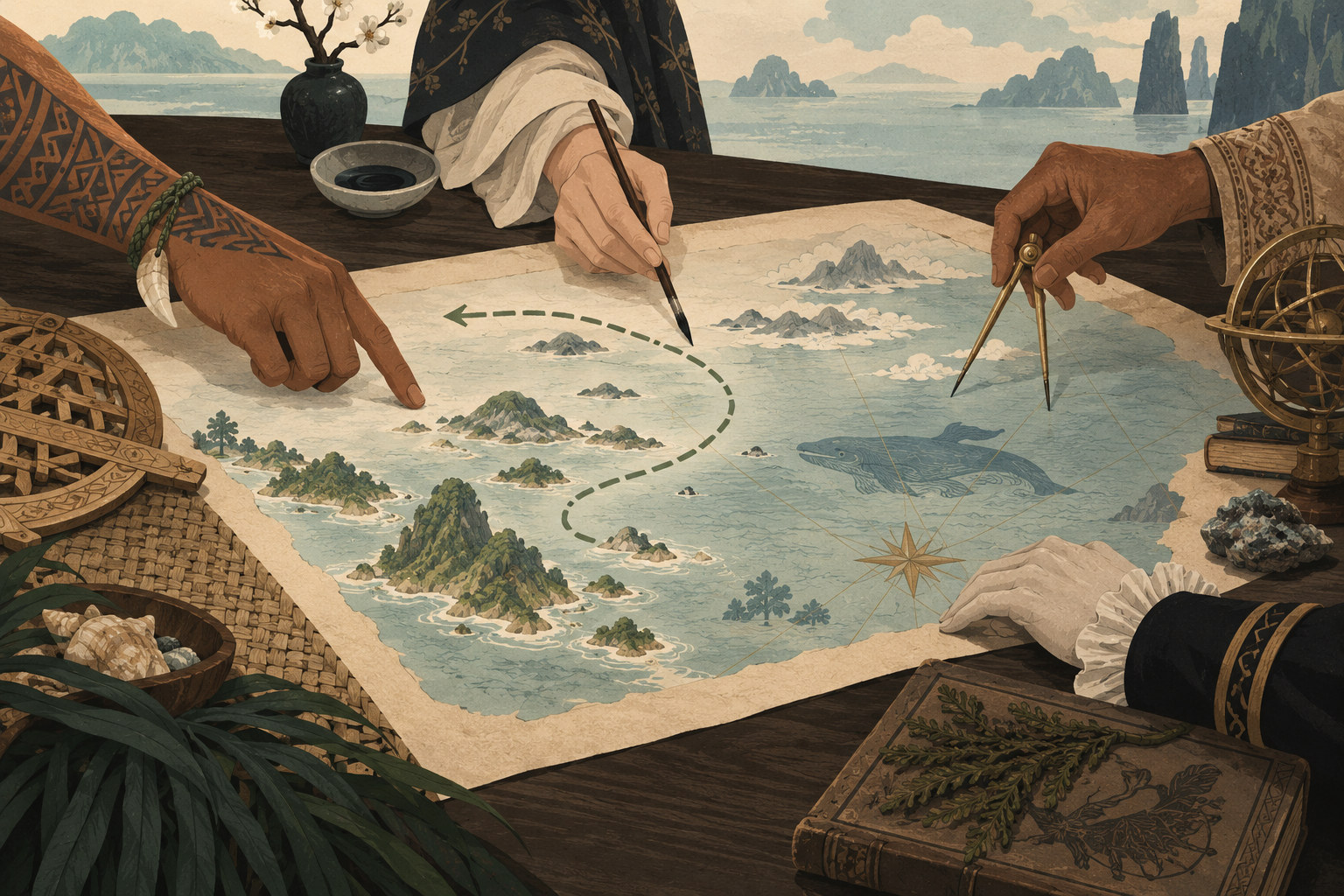
Story record
Historical frame
Early-eighteenth-century Atlantic and Caribbean piracy plus early-nineteenth-century South China Sea piracy in an explicitly linked frame.
Reader contract
Linked historical fantasy about attribution, navigation, violence, and legend; it does not claim that Anne Bonny, Mary Read, and Zheng Yi Sao sailed together.
Story context
Notice how an original mapmaker's acts of naming and copying create agency while the chart keeps distinct histories from collapsing into one legend.
Synopsis
A chart attributed to one legendary pirate contains routes that cannot belong to the same voyage. An original cartographer follows the contradictions toward separate histories while a patron demands one profitable name.
The ingredients
These are the exact public records connected to this Story—not suggestions inferred from tags or matching words.
Character
The person whose choices carry the pressure.
Connected record
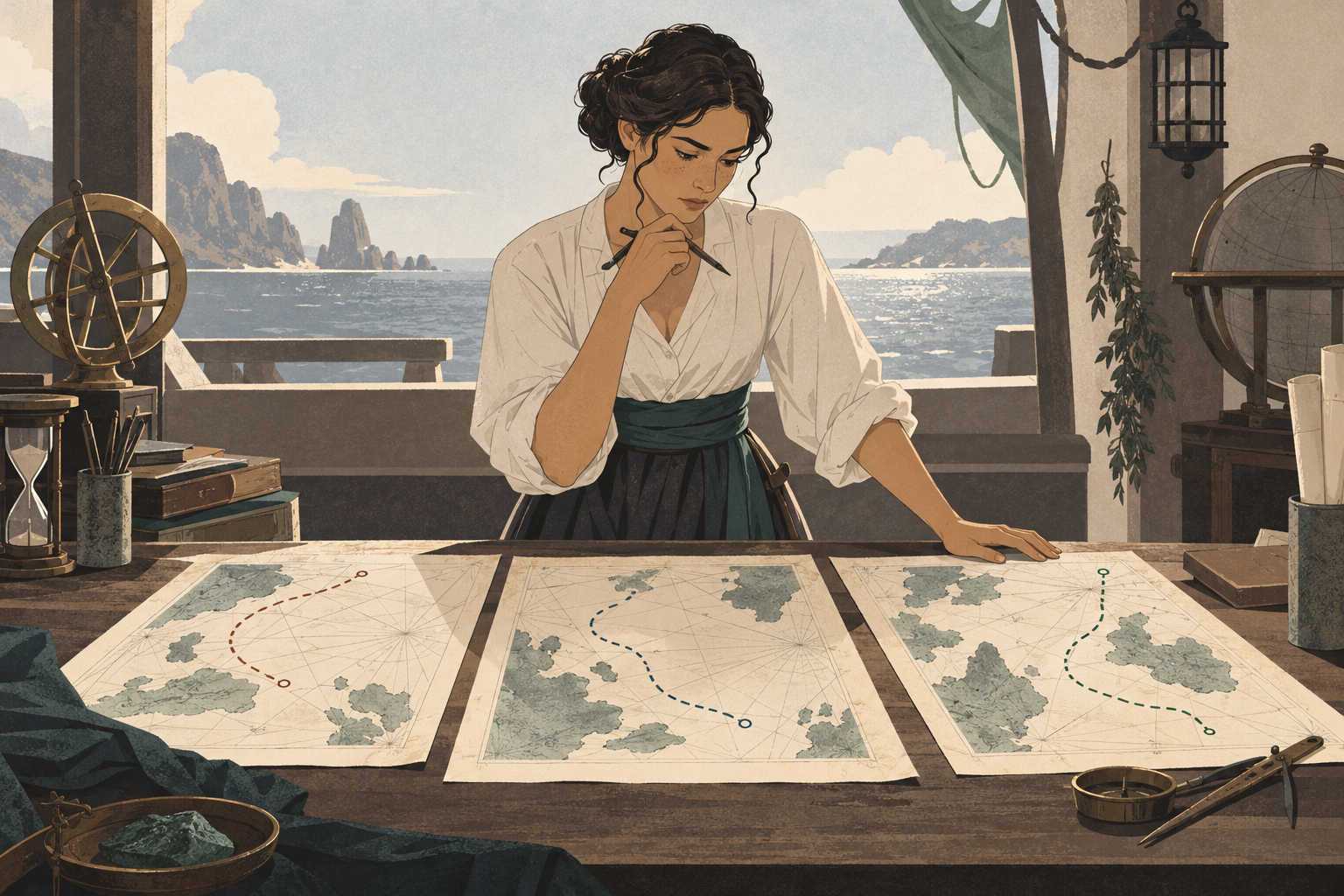
The Cartographer Without a Flag
The Cartographer Without a Flag is a proposed original viewpoint for Pirate Queens of the Seven Seas: a mapmaker whose livelihood depends on giving merchants and captains certainty, even when the surviving record cannot supply it.
Open recordWorld
The inhabited system that makes the choice costly.
Connected record
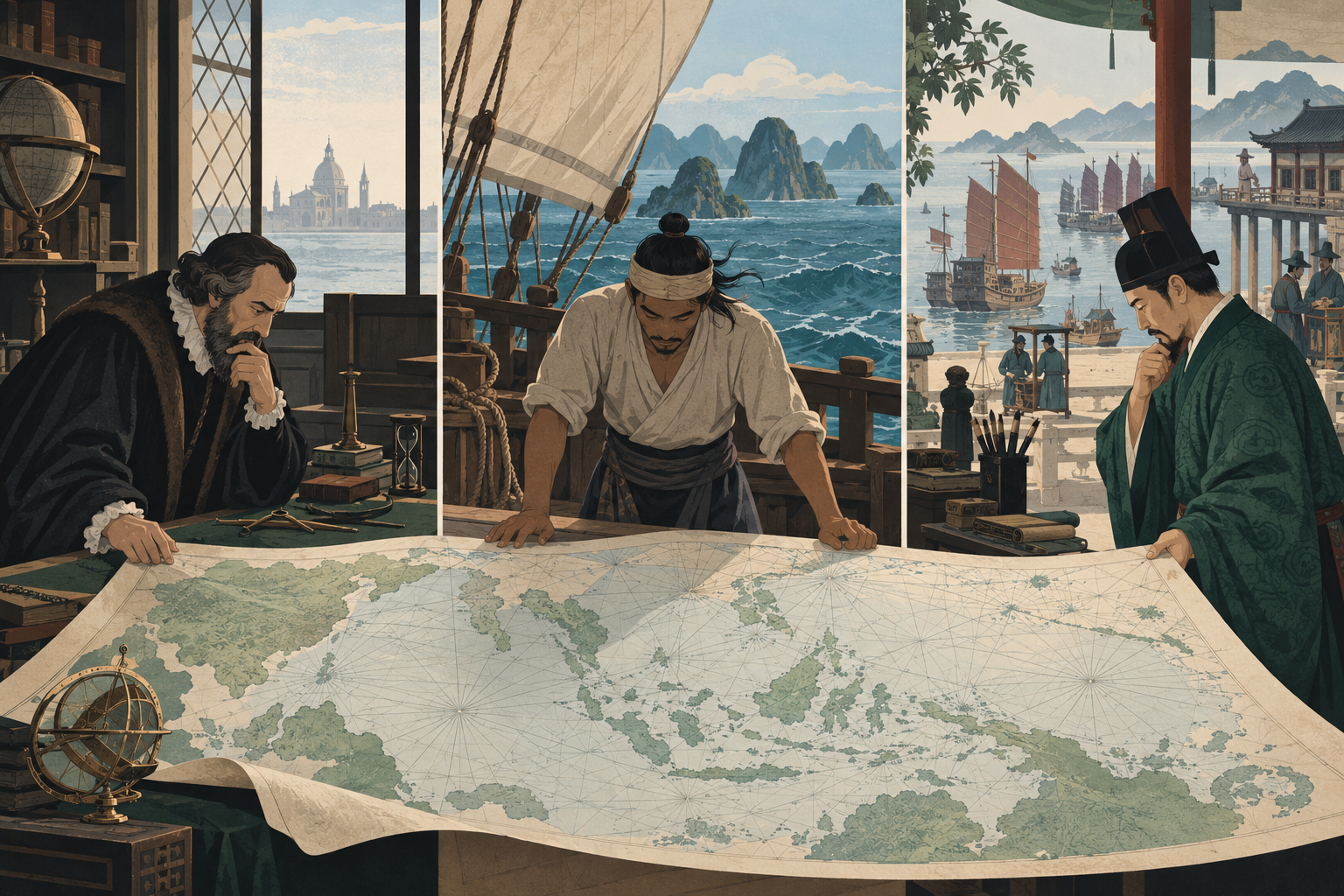
The Sea Between Recorded Lives
This proposed world refuses to collapse separate oceans and centuries into one generic pirate age. Its historical layers remain materially distinct; an invented chart is the only bridge between them.
Open recordPlot
The causal route that turns pressure into consequence.
Connected record
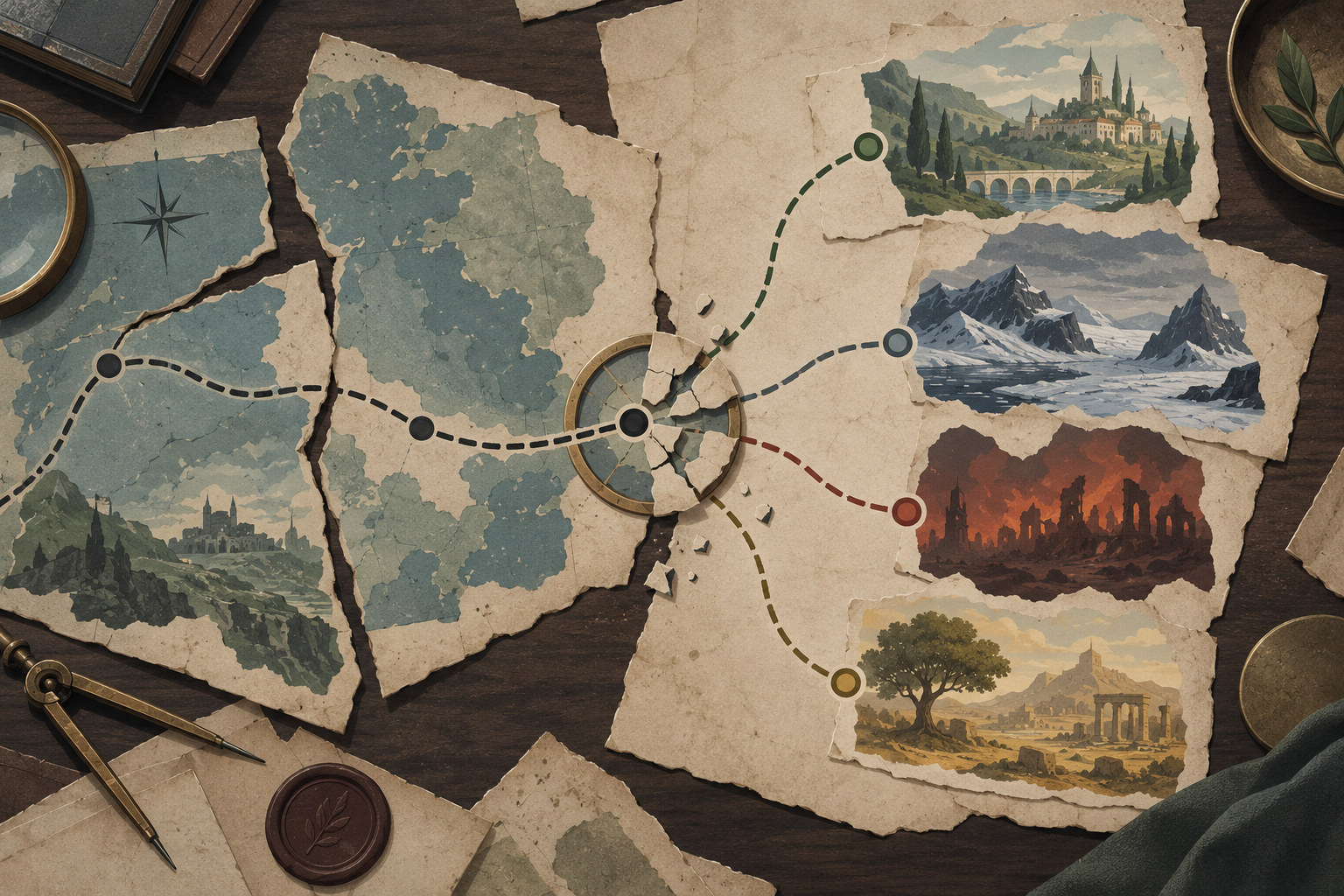
The Map That Demands a Name
Because the routes contradict one another, the cartographer tests inks, coastlines, and provenance. Therefore she learns that the anomaly is not merely a copying error. Because proving that result would expose how the chart was acquired, she seeks testimony th
Open recordEditions and field notes
Publications
No linked public record is available yet. The route remains open while the dossier is being catalogued.
Field notes
Connected record
How to Write Historical Figures as Characters Without Turning Them into Costumes
Build historical characters from documented constraints, competing motives, period-shaped assumptions, and clearly labelled invention.
Open recordRead
The approved public story or excerpt appears here as the canonical WordPress body.
Story record
An original cartographer discovers that a chart attributed to one legendary pirate contains routes from separate women, oceans, and centuries. To make the record useful, she must decide whether to turn their differences into one saleable myth.
- Current public form: redevelopment dossier; no approved short fiction.
- Legacy evidence: an earlier audit recorded a 3,180-word lore book.
- Historical frame: multiple periods and maritime regions; exact frame remains a research gate.
- Reader contract: linked historical fantasy about attribution, navigation, violence, and legend—not a claim that the historical women sailed together.
The ingredients
- The Cartographer Without a Flag supplies an original agent whose choices connect the material.
- The Sea Between Recorded Lives keeps the historical layers distinct.
- The Map That Demands a Name makes compression itself the central pressure.
Read
The Names at the Edge of the Chart (not yet published) is a complete editorial concept draft testing attribution and the cartographer’s consequential refusal. It is not human-approved canon and must not be staged or excerpted publicly yet.
Record and invention
Bonny, Read, and Zheng Yi Sao were historical people represented through uneven sources. The cartographer, anomalous chart, and linked structure are proposed inventions. The research package records the chronology and source limitations.
Development status
The project must choose its formal frame, approve the original lead, complete separate research ledgers, lock the chart rule, and write an approved concept short before it can reach story-bible status. A longer form may become linked novellas or an anthology frame; it is not an existing novel.
Books and editions
The legacy Publication draft (not yet published) is separate from this story work and cannot expose a Gumroad action until the exact listing is verified.
From short story to novel route
What a longer work would deepen
A longer work could use linked novellas or an anthology frame after separate maritime research, a locked chart rule, an approved lead, and an approved concept short.
Work still open
Formal frame, original-lead approval, region-specific research, chart mechanics, private ending and scene plan, continuity work, and human approval of the concept short remain open.
Record and invention
Bonny, Read, and Zheng Yi Sao are historical people represented through uneven sources. The cartographer, anomalous chart, and linked route mechanism are inventions.
Editorial process
This redevelopment record and non-canon concept short were produced through source-backed research and AI-assisted editorial drafting; human historical review, revision, and approval remain pending.
Source status
See the cluster research package for Royal Museums Greenwich and Zheng Yi Sao sources and their limitations.